
How to White Label Interactive Pet Toys for Startups: The 2026 Reality Check
The most dangerous misconception in the pet tech world is that “white labeling” is just selecting a catalog item and slapping a logo on the box. If you want to know **how to white label interactive pet toy for pet brand startup** projects successfully, you have to abandon the idea of “catalog shopping.” In 2026, the market has zero tolerance for buggy firmware or cheap plastic that snaps under a bored dog’s jaw. To succeed, you must move beyond the brochure and into the mechanics of industrial-grade engineering.
The pet tech landscape is undergoing a tectonic shift. Two years ago, any connected device with a generic app would sell. Today, the “smart” label is no longer a differentiator; it is a baseline expectation. Buyers are demanding Matter-compatible devices and real-world durability. If your white-label partner is still peddling legacy connectivity protocols, you are essentially launching a product that is already obsolete.
### Sensory Reality: Inside the Production Line
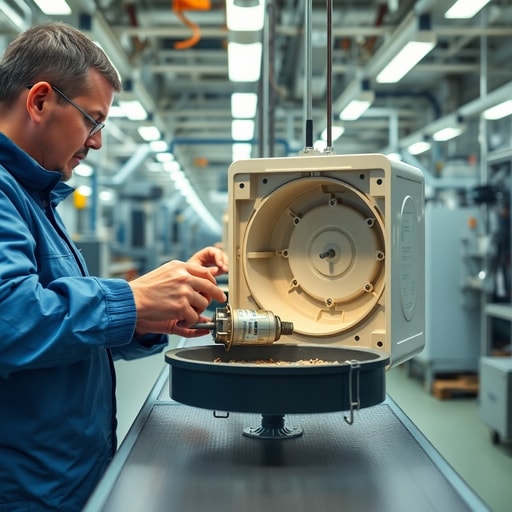
Step onto our factory floor, and the first thing you notice isn’t the machines—it’s the rhythm. There is a specific, high-pitched hum from the injection molding presses and the rhythmic *click-clack* of the assembly line belts. I spent the morning watching our technicians perform an aging test on a batch of interactive laser toys. The air smells slightly of warm electronics and high-grade polycarbonate.
You need to feel that environment to understand the stakes. When a worker pulls a unit off the line to check the torque on a screw, they aren’t just following a checklist. They are looking for the “ghosts” in the machine—the microscopic flash on a plastic edge that could scratch a pet’s nose, or the subtle hesitation in a motor that signals a future jam. A startup’s reputation is built on these tiny, unseen details.
### Practical Engineering: Where Startups Win or Lose
When you white label an interactive toy, you aren’t just buying plastic; you are buying the underlying logic. In 2025, the industry shifted toward dual-core ESP32 chips for better power management. This move allows for more sophisticated AI interactions and faster response times.
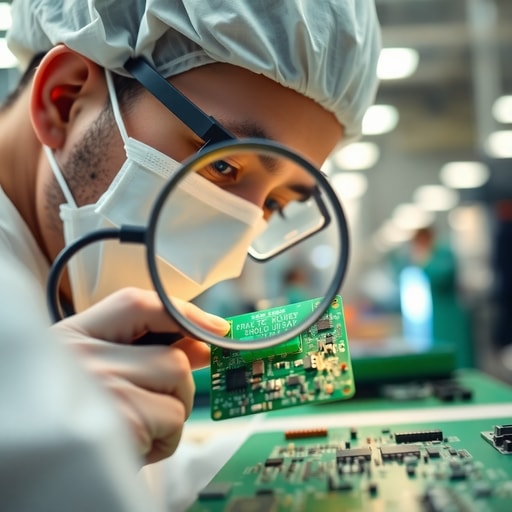
I’ve seen it firsthand: an AOI (Automated Optical Inspection) camera flagged uneven solder brightness on three boards in a batch of a thousand. A less rigorous factory might have shipped those units to save a few dollars. Those boards would have failed within months due to thermal stress. We scrap them. That is the cost of doing business when you care about brand longevity.
Consider the failure case of a competitor’s feeder that suffered a food jam due to an impeller design with an insufficient anti-clog gap. It was a simple engineering oversight that led to thousands of returns and a tanked Amazon ranking. Our team fixed this by implementing redesigned anti-jam infrared detection. If an obstruction occurs, the motor reverses automatically. This is the difference between a brand that builds loyalty and one that builds a graveyard of returns.
### Comparison Table: Navigating Component Quality
| Feature | Standard OEM | Premium OEM | DDPark OEM Standard |
| :— | :— | :— | :— |
| **Microcontroller** | Single-core basic | ESP32 | Dual-core ESP32 (Enhanced) |
| **QC Process** | Visual inspection | Random sampling | AOI & Pre-shipment Inspection |
| **Connectivity** | Proprietary | Tuya/Matter | Stable Tuya/Matter + Custom APP |
| **Material** | Standard ABS | BPA-Free/Food Grade | FDA-Compliant/Certified |
| **Reliability** | Variable | Reliable | Zero-Defect Philosophy |
### Audit Your Manufacturing Partner
If you are sourcing for a veterinary clinic or a high-end pet boutique, your criteria must be higher than the average e-commerce dropshipper. Use this 7-item checklist to audit your manufacturing partner:
1. **Request a Pre-Shipment Inspection Report:** Never accept a batch without verified data.
2. **Verify Sensor Accuracy:** Ask how they calibrate their high-precision infrared sensors and load cells.
3. **Stress-Test Connectivity:** Ensure the device supports seamless firmware rollback capabilities if an OTA update fails.
4. **Confirm Material Safety:** Demand documentation for BPA-free materials and FDA compliance.
5. **Check Power Management:** Evaluate the efficiency of the dual-core architecture.
6. **Assess App Stability:** Test the custom APP customization against real-world network latency.
7. **Review Aging Tests:** Ask for the duration of the aging test performed on the electronics before final assembly.
### The DDPark Perspective
We provide a roughly 16%-28% improvement in product longevity compared to standard market offerings by focusing on these rigorous testing protocols. Our expertise allows us to offer flexible MOQ for startups and distributors, ensuring you aren’t over-leveraged before your first big marketing push. Whether you are targeting the USA, Germany, or Japan, our products are built to meet the CE/FCC/RoHS certification standards required for global retail.
When you explore our smart pet product catalog, you aren’t just looking at hardware; you are looking at a platform built for real-time interaction and durability. We understand that your brand’s success relies on the hardware performing exactly as promised on your packaging.
### Scaling Without the “Fastest to Market” Trap
Don’t fall for the “fastest to market” trap. The pet industry is unforgiving of hardware failure. By partnering with a factory that prioritizes 10+ years of manufacturing expertise, you protect your startup’s most valuable asset: customer trust.
If you are ready to scale, request a free OEM quote from DDPark today to see how our zero-defect, factory-direct approach can stabilize your supply chain for 2026 and beyond.
Frequently Asked Questions
Q: What is the most common technical failure in white-label smart pet toys?
A: The most common failure point is mechanical jamming in dispensers or sensor drift in interactive toys. At DDPark, we mitigate this through advanced anti-jam infrared detection and rigorous load cell calibration before assembly.
Q: How does firmware customization affect the lead time for a pet brand startup?
A: Firmware customization, such as tailoring an app or integrating specific connectivity protocols, usually adds 2-4 weeks to the development cycle. However, using mature, stable base firmware allows for a faster go-to-market strategy.
Q: Are there specific certifications required for exporting smart pet toys to the US and EU?
A: Yes. To enter these markets, your products must hold CE, FCC, and RoHS certifications. Additionally, any components coming into contact with food or pets should be FDA compliant and utilize BPA-free materials.
Work with DDPark
Benefit from factory direct OEM pricing, stable Tuya connectivity, aging test before shipment, and our proprietary anti-jam infrared detection technology to ensure your startup succeeds in a competitive market.
Ready to Start Your OEM Order?
Contact our B2B team today for pricing, MOQ, and custom branding options.