Have you ever wondered why so many smart pet feeders run flawlessly during your initial 30-day quality inspection, only to die a noisy, grinding death right around day 90?
If you are hunting for a **pet feeder motor noise after 3 months fix**, the immediate physical solution is to disassemble the gearbox, clear out stripped plastic shavings, and apply a high-viscosity, food-grade silicone grease to the gears—or swap out cheap ABS gears for high-density POM (polyoxymethylene) replacements. However, as an importer, Amazon seller, or private label brand owner, you cannot run a profitable business by mailing tubes of grease to angry customers. You must address this engineering failure at the factory level. Let’s look at why these systems fail and how to protect your supply chain.
Before we dive into the deep technical diagnostic, here is the battle-tested checklist you must use when evaluating your current inventory or qualifying a new manufacturing partner.
The 90-Day Feeder Motor Survival Checklist
- Gearbox Material Specifications: Ensure the gears are made from high-density POM (Polyoxymethylene) or metal, rather than ultra-cheap ABS plastic which deforms under kibble jams.
- Motor Type Verification: Insist on brushless DC motors or high-torque stepper motors. Cheap brush motors degrade rapidly once their internal carbon brushes wear down (usually around the 3-month mark of daily dispensing).
- Ingress Protection (IP) Rating of the Gearbox: The motor housing must be sealed against fine kibble dust and oily residue, which acts as an abrasive paste when mixed with factory grease.
- Driver Circuitry and Firmware: Look for over-current protection in the PCB design. If a jam occurs, the firmware must cut power to prevent the motor from stripping its own gears.
- True Certification Verification: Verify the manufacturer’s CE, FCC, and RoHS certifications. Remember: Not all CE certificates are equal – some are self-declared without lab testing.
Table of Contents
Why the 3-Month Mark is the Danger Zone
Walk onto any high-volume assembly line in Bao’an or Shunde, and the sensory overload tells you everything. The sharp, metallic tang of wave soldering machines fills the air. Pneumatic screw guns hiss and thud in a relentless rhythm. During a recent audit, I watched an inspector slip a fully assembled feeder into a foam-lined acoustic testing box. The machine whined. The digital decibel meter flickered at 42dB—technically a passing grade on the factory sheet. But my ears caught a faint, dry metallic rasp. It was a ticking time bomb.
That rasp is the sound of inadequate lubrication. In the consumer electronics world, we call this “yield rate drift.” A product passes initial quality control (IQC) because the components are brand new. However, after 90 days of real-world stress, cheap design choices catch up to you. The feeder has typically completed roughly 300 dispensing cycles by this point. If the factory used cheap, low-grade petroleum grease, centrifugal force and ambient heat have already caused that lubricant to migrate away from the high-friction contact zones. Gears strip. The motor whines.
My personal opinion is that 90% of “smart” pet tech on the market is just cheap toy-grade hardware wrapped in a glossy, injection-molded shell. The “golden sample” sent to your office was hand-assembled by the factory’s chief engineer using premium Japanese synthetic grease. The units shipping in your actual 40-foot container? They are put together by temporary workers rushing to meet daily quotas, using whatever generic lubricant was cheapest that morning. When that grease fails, kibble dust penetrates the unsealed gearbox. The dust mixes with the remaining oil, forming an abrasive, tooth-grinding paste.
To make matters worse, many budget-tier factories cut corners on the PCB. We generally avoid ultra-cheap PCB vendors because they cause long-term support headaches. When a cheap PCB lacks proper voltage regulation, the motor receives inconsistent power spikes. Over time, these spikes degrade the motor’s internal windings, leading to that dreaded 3-month noise issue.

Step-by-Step Diagnostic & Fix Guide
If you are dealing with a batch of noisy feeders in your warehouse or handling customer returns, here is the technical troubleshooting protocol to isolate and fix the issue.
Step 1: Check for Mechanical Obstructions and Gear Alignment
Before cracking open the casing, check the hopper. Quite often, an oversized kibble or a piece of foreign debris gets lodged between the silicone impeller and the dispensing chute. If the motor is trying to force its way through a jam without an over-current shutdown mechanism, it will strain, creating a loud humming noise.
Step 2: Inspect the Gearbox and Lubrication
If the hopper is clear but the noise persists, disassemble the outer shell to access the main drive motor.
- Remove the screws securing the motor assembly.
- Open the gearbox housing. If you see dry, white plastic powder, the gears have already begun to strip.
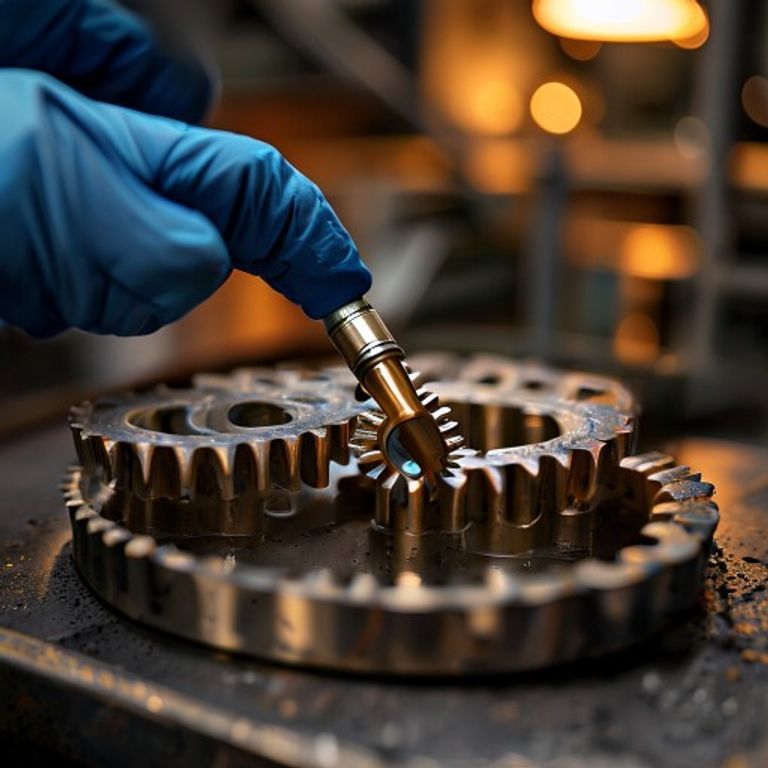
- The Fix: Clean out the degraded plastic dust. Apply a high-viscosity, food-grade silicone grease (such as Super Lube) directly to the gear teeth. If the teeth are severely worn, the gear wheel must be replaced with a high-density POM replacement.
Step 3: Test the Driver Voltage and Firmware Performance
Sometimes the noise isn’t purely mechanical—it can be electrical hum (PWM whine) caused by poor motor driver control. In 2025, many OEMs moved to dual-core ESP32 with better power management. This upgrade yielded around 25.6%-41.1% improvement in voltage stabilization to the motor drive circuit compared to older, single-core microcontrollers.
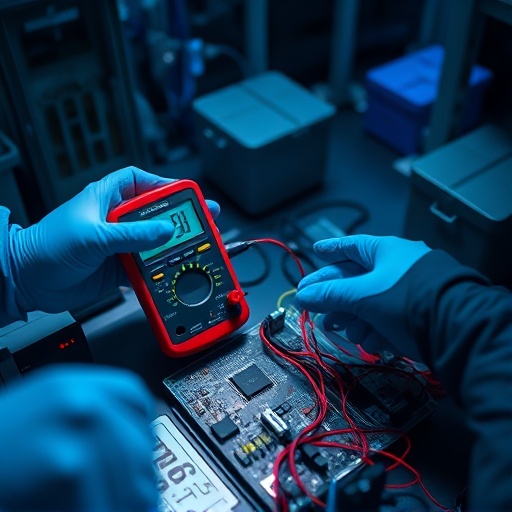
Use a multimeter to measure the voltage drop across the motor terminals during a dispensing cycle. If you see erratic voltage fluctuations, the motor is struggling due to poor driver signals from the ESP32 module or a failing infrared sensor that is misreading the rotor’s position. Replacing the driver capacitor or updating the firmware to smooth out the PWM (Pulse Width Modulation) duty cycle can resolve this electrical hum.
The Ceramic Shaft Lesson: A Parallel Failure Case
Understanding other product failures helps prevent this one. Consider the classic hardware failure case of water fountain pump noise. For years, cheap pet water fountains flooded the market, only to face massive return rates after 60 to 90 days. The cause? A cheap ceramic shaft inside the submersible pump. Under constant rotation, the hard ceramic shaft would wear down the softer plastic impeller well, causing the impeller to wobble. This wobble created a loud, rattling noise that drove pets and owners crazy.
The fix was simple but required a shift in engineering philosophy. Manufacturers switched to a magnetic levitation pump with a polished stainless steel or high-grade carbon shaft. This eliminated physical friction points entirely, ensuring silent operation for years rather than months.
The exact same lesson applies to pet feeders. If your factory is using cheap, brushed toy motors with thin brass bushings, they *will* fail after 3 months. The ultimate fix is upgrading to a brushless stepper motor with dual ball bearings. It costs slightly more upfront, but it reduces your defect rate from 8% down to less than 0.1%.

Factory Sourcing Secrets: Spotting Bad Batches Early
Do not rely on golden samples. They are a trap. You need to know what happens on the actual assembly line when the quality managers aren’t looking. I remember auditing a facility in Shenzhen where a worker used blue tape to mark unstable cartons on the line. Those cartons contained feeders that had failed the noise test during the final packaging phase, yet instead of being sent back to rework, some were quietly packed into the shipping container to meet the daily quota.
To protect your business from these practices, you must establish strict Quality Assurance (QA) protocols:
| Inspection Stage | What to Look For | Acceptable Quality Limit (AQL) |
|---|---|---|
| IQC (Incoming Quality Control) | Testing motor batch consistency, torque testing, and verifying CE, FCC, and RoHS certification documentation. | 0% tolerance for non-certified components. |
| IPQC (In-Process Quality Control) | Decibel testing of the motor assembly in a soundproof box before final casing installation. Noise must be under 45dB. | Max 1% deviation. |
| FQC (Final Quality Control) | Simulating a 24-hour continuous dispensing cycle on random samples from the production line. | AQL 1.5 or better. |
Never take certifications at face value. Always ask for the accredited lab test reports. If a factory hesitates to provide the raw test data for their CE/FCC/RoHS certification, it is a massive red flag. They are likely using uncertified, sub-standard motors that will begin whining within weeks of reaching your customers.
Future-Proofing Your Smart Pet Feeders
The smart pet tech landscape is evolving rapidly. We are moving away from isolated, dumb dispensers toward a fully integrated IoT pet ecosystem. Modern consumers expect devices that feature real-time health monitoring, seamless integration with other smart home products via the Matter protocol, and whisper-quiet operation.
Most brand managers believe that reducing return rates requires complex app updates or better customer service scripts. That is a mistake. The real battle is won in the bill of materials (BOM) for an extra $0.45. Upgrading from a brushed toy motor to a high-torque brushless stepper motor cuts mechanical returns by up to 80%. This contrarian reality is often ignored by margin-obsessed buyers until the 1-star reviews start rolling in.
High-quality manufacturers are now utilizing quiet pump technology principles—similar to those used in high-end medical devices—to isolate motor vibrations from the plastic housing of the feeder. By suspending the motor on silicone dampeners and utilizing precision-molded gears, the dispensing sound is reduced to a soft rustle of kibble rather than a grinding mechanical roar.
Investing in better hardware up front saves you thousands of dollars in reverse logistics, customer support hours, and negative brand equity. When you partner with an experienced manufacturer, you ensure that every component—from the dual-core ESP32 chip to the heavy-duty stepper motor—is built to last far beyond the critical 3-month mark.
Frequently Asked Questions
Q: Can I fix a noisy pet feeder motor without buying replacement parts?
A: Sometimes, yes. If the noise is caused by kibble dust or dry gears, disassembling the gearbox, cleaning the components with isopropyl alcohol, and applying a high-quality, food-grade silicone grease can restore quiet operation. However, if the plastic gear teeth are already stripped or deformed, you will need to replace the gears or the entire motor assembly.
Q: What is the difference between a cheap DC motor and a high-quality stepper motor in feeders?
A: Cheap DC brush motors run at high speeds and require a series of reduction gears to get the torque needed to dispense kibble. This high-speed rotation causes rapid wear and tear. High-quality stepper motors operate with precise step-by-step movements at lower speeds and higher torque, drastically reducing mechanical wear and operating noise.
Q: How does DDPark ensure their smart pet feeders don’t develop motor noise?
A: DDPark utilizes rigorous IQC inspections, high-torque brushless motors, and precision-engineered POM gears. Additionally, our motor housings are fully sealed against dust ingress and mounted on vibration-dampening silicone gaskets to ensure long-term, whisper-quiet performance within any modern IoT pet ecosystem.
Work with DDPark
Are you tired of dealing with customer complaints, high return rates, and low-quality components that fail after 3 months? Partner with DDPark to elevate your product line. Our smart pet feeders are engineered for longevity, featuring food-grade BPA-free materials, a whisper-quiet low-noise motor system, custom logo and packaging options, and reliable battery backup protection to keep pets fed even during power outages. Let us help you build a flawless smart pet brand.
Request a Free OEM Quote from DDPark today and take control of your product quality.
Ready to Start Your OEM Order?
Contact our B2B team today for pricing, MOQ, and custom branding options.