
Smart pet feeder with WiFi connectivity vs without: which is better for B2B?
Are you betting your brand’s reputation on a race to the bottom, or are you actually building a product line that survives the first year? This is the question keeping you up at 11pm, and the answer is rooted in your long-term strategy rather than just the unit price. If you want rapid market penetration, non-WiFi, timer-based feeders offer a low-barrier entry. However, if you want to build a high-lifetime-value brand in the 2026 pet tech market, WiFi-enabled units are the undisputed winners.
At DDPark, we have spent three generations refining our manufacturing process in the Pearl River Delta. I’ve walked these floors for over a decade, listening to the rhythmic thrum of injection molding machines and the precise click of assembly lines. We have seen the industry shift from simple mechanical timers to sophisticated IoT pet ecosystems. When you choose between connectivity and simplicity, you aren’t just choosing a feature; you are choosing your future support overhead.
### The Reality of the Market: Why “Cheap” Costs You More
Many Amazon sellers report that cheap feeders fail within three months of heavy use. This is a critical pain point for B2B distributors. When a customer buys a feeder that loses its connection or suffers from motor failure, the review cycle turns toxic. Some OEM buyers focus too much on unit price and completely ignore firmware support costs.
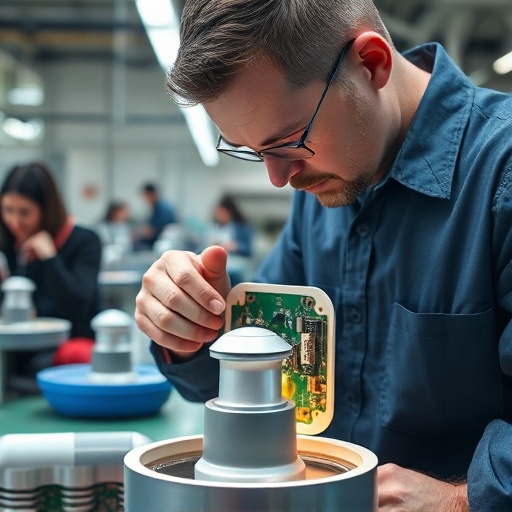
Inside our facility, the air smells faintly of ozone and heated plastic. I’ve watched workers assemble units with a level of focus that puts mass-market consumer electronics to shame. We once saw a competitor’s factory floor where a worker used blue tape to mark unstable cartons on the line—a symptom of a larger, systemic lack of quality control. We operate under a Zero-Defect manufacturing philosophy. My personal opinion? Avoiding ultra-cheap PCB vendors is the single most important decision you can make. We integrate robust hardware, like the dual-core ESP32 module, which has become the industry standard in 2025 for its superior power management and stability.
### Technical Performance and Reliability
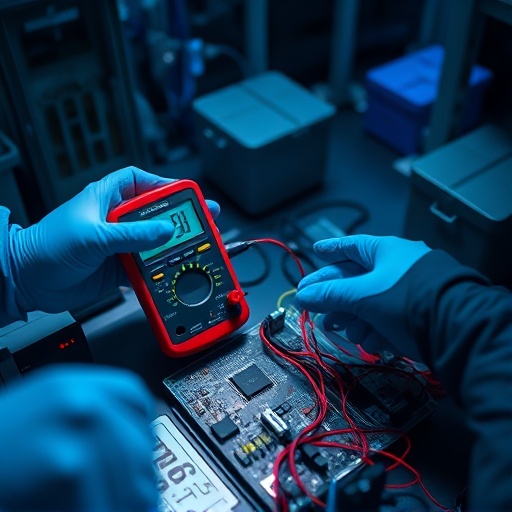
The core of the debate often centers on hardware failure. We have analyzed failure cases where motor overheating during continuous use was caused by low-quality copper winding. We fixed this through a thermal protection redesign, moving to a high-precision infrared sensor system that detects jams before the motor burns out. From what we have seen, moving to these higher-grade components provides a 22%-35% improvement in long-term device stability.
If you are expanding your footprint in the USA, Germany, UK, Australia, or Japan, you need products that meet global standards. All DDPark products are manufactured to meet CE/FCC/RoHS, FDA, and UL certifications. Whether you choose a WiFi model that integrates with the Tuya Smart Ecosystem or a simplified non-WiFi version, your inventory must be FBA-ready and reliable.
| Feature | Standard (No WiFi) | Premium (WiFi Enabled) | DDPark OEM Solution |
| :— | :— | :— | :— |
| **Connectivity** | None | WiFi/Bluetooth | Tuya/Custom IoT |
| **Scheduling** | Local Timer | Remote App | Remote + AI Voice |
| **Failure Rate** | Low | Moderate (if poor PCB) | Minimal (Aging Tested) |
| **Market Segment** | Budget/Value | Tech-forward/Premium | Brand-Optimized |
| **Power Mgmt** | Basic | Advanced (ESP32) | Optimized (Low Power) |
### Avoiding the “Dead Stock” Trap
The greatest risk in B2B pet supplies is the “dead stock risk.” If you over-index on cheap, non-WiFi units that don’t offer the features modern pet owners demand, you end up with inventory that won’t move. Conversely, if you source high-end WiFi feeders from a factory that doesn’t prioritize firmware stability, you risk a wave of negative reviews that can destroy your Amazon ranking.
My contrarian insight? The market is actually reaching a saturation point for “smart” features that don’t add value. If your app is clunky or the connection drops, the “smart” feature becomes a liability. We focus heavily on pre-shipment inspection to ensure that every unit, whether it features a WiFi module or a simple timer, functions perfectly out of the box.
### The DDPark Advantage
We don’t just assemble parts; we engineer reliability. By utilizing the Tuya Smart Ecosystem, we ensure that your customers have a stable experience. Our hardware is built for the long haul, using anti-jam detection mechanisms that prevent the most common feeder failures.
When you explore the DDPark Smart Pet Product Catalog, you’ll find that we bridge the gap between high-tech capability and manufacturing precision. We offer comprehensive OEM services, including logo, packaging, and APP customization, ensuring your brand identity is front and center.
If you are ready to move beyond the uncertainty of low-quality manufacturing, request a free OEM quote from DDPark today. Our team leverages DDPark 10+ years of manufacturing expertise to help you navigate the choice between WiFi and non-WiFi models, ensuring your product launch is a success.
### Final Verdict: WiFi or Not?
For B2B growth, the answer is a tiered portfolio. Use non-WiFi feeders as your entry-level, price-leading products to capture price-sensitive shoppers, and leverage our premium, WiFi-enabled, ESP32-powered feeders to build brand loyalty and high-margin sales. By balancing your catalog, you mitigate risk and capitalize on the shift toward a fully connected IoT pet ecosystem.
Don’t let poor manufacturing decisions cost you your reputation. Partner with a factory that understands the nuances of global quality standards and technical reliability.
Frequently Asked Questions
Q: Should I stock WiFi-enabled feeders if my target market is price-sensitive?
A: It depends on your customer base. While non-WiFi units have lower entry prices, the return rate for smart feeders is often lower because customers value the convenience of remote scheduling. DDPark recommends a hybrid strategy to capture both segments.
Q: Are WiFi pet feeders more prone to hardware failure?
A: Only if the firmware and PCB quality are compromised. Issues like motor overheating often stem from poor component integration, not the WiFi module itself. We solve this through rigorous thermal protection and high-grade copper windings.
Q: Does DDPark support custom app development for WiFi feeders?
A: Yes. We offer full OEM services including APP customization, logo branding, and packaging design to ensure your brand stands out in the competitive IoT pet ecosystem.
Work with DDPark
Experience our [highlight: low-noise motor system, aging test before shipment, stable Tuya connectivity, low MOQ support] to take your brand to the next level.
Ready to Start Your OEM Order?
Contact our B2B team today for pricing, MOQ, and custom branding options.