When choosing between a pet feeder with camera with infrared sensor vs without: which is better for B2B, the answer depends entirely on your risk tolerance for post-sale support. If you want the highest margins, skip the camera. If you want to own the premium market segment, the camera is merely the entry fee. The true differentiator isn’t the presence of the lens, but the mechanical reliability of the infrared sensor that prevents over-feeding and jamming.
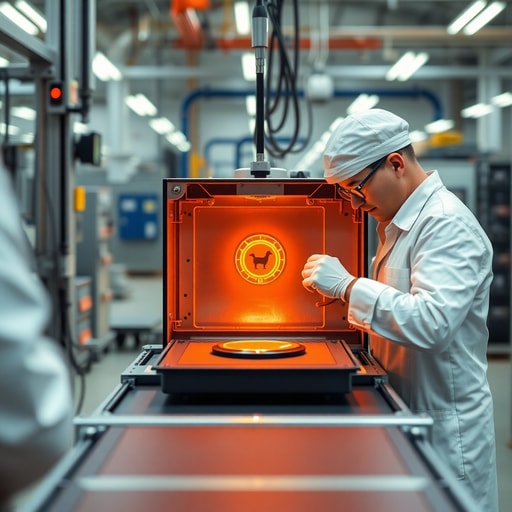
I remember standing on a factory floor in Shenzhen last winter, the air thick with the smell of ozone and heated plastic. The assembly line was moving at a clip, but the lead engineer was frantically pulling units off the belt. He wasn’t checking the aesthetics; he was testing the infrared beam’s threshold. He pointed to a pile of rejected sensors—cheap, generic components that flickered under standard fluorescent office lighting. That is the hidden cost of “cheap” tech. You don’t just pay for the sensor; you pay for the calibration that keeps it from ghost-triggering when a shadow passes over the food bowl.
Most buyers fall into the trap of over-engineering. They see a spec sheet with 1080p resolution and night vision, and they assume it’s a winner. But I’ve seen thousands of units returned because the app wouldn’t pair or the camera module caused the internal temperature to spike, shortening the life of the motor. A feeder that performs perfectly as a feeding device but fails as a smart device is a dead product. Your customers will forgive a grainy video feed, but they will never forgive a hungry, locked-out pet.
My contrarian take? Brands are currently obsessed with “AI pet recognition,” yet they ignore the fundamental physics of the auger. If the motor torque is insufficient for large-kibble diets, no amount of infrared sensing or cloud-based video streaming will save your reputation. I advise clients to prioritize the structural integrity of the food delivery system first. The camera is a feature, but the auger is the product. Focus your budget on high-grade copper windings for the motor and food-grade BPA-free plastics before you worry about the camera’s frame rate.
Distributors must also account for the “Support Burden Index.” A standard, non-camera feeder is a low-maintenance asset. It rarely triggers support tickets unless the hardware physically breaks. Conversely, a pet feeder with camera with infrared sensor vs without: which is better for B2B? The version with the camera will inevitably generate 5x the support volume. You need a robust, scalable cloud infrastructure and a dedicated technical support team to handle the “I can’t connect my Wi-Fi” complaints. If your organization isn’t prepared to handle the digital side of the business, stick to the mechanical models.
Market segmentation dictates your path. For the US and European markets, the camera has become a baseline expectation for the “pet parent” demographic, who treat their animals as children. These consumers demand remote interaction. In these regions, the infrared sensor is critical for “portion accuracy” claims, which are increasingly scrutinized by consumer protection agencies. If you are selling in these territories, you cannot compete without these features.
However, if you are targeting emerging markets or budget-conscious retail chains, the “without” category remains a goldmine. These units offer consistent, reliable functionality that bypasses the complexities of home network compatibility. They are the “workhorses” of the industry—easier to ship, easier to store, and nearly impossible to break. Sometimes, the most profitable product isn’t the one with the most sensors; it’s the one that simply works every single time.
| Feature | Standard Mechanical | Smart IR/Camera Unit |
|---|---|---|
| Support Ticket Rate | Low (1-2%) | High (8-12%) |
| Market Positioning | Economy/Reliability | Premium/Lifestyle |
| Component Risk | Negligible | High (Calibration/Heat) |
Quality control remains the final hurdle. I have walked through factories where the assembly line is pristine, only to find that the testing software for the infrared sensors was running on a laptop that hadn’t been updated in three years. Consistency isn’t just about the hardware; it’s about the testing environment. At DDPark, we simulate real-world conditions—varying light, kibble size, and Wi-Fi interference—before a single unit is boxed. We know that a single faulty sensor in a batch of 5,000 can ruin a brand’s rating on Amazon or a key retail partner’s trust.
Interoperability is the next mountain to climb. The rise of Matter-compatible smart home devices means your next generation of feeders must be ready to play nice with other appliances. If your OEM partner is still using proprietary, closed-loop apps that don’t integrate with Google Home or Alexa, you are buying into obsolescence. Ensure your partner understands these connectivity standards as deeply as they understand plastic injection molding.
Your choice should be dictated by your brand’s maturity. If you are just starting out, prioritize the smart pet feeder OEM partner who offers the most transparent testing data. Do not let yourself be blinded by the feature list. Demand to see the failure rates, the sensor calibration logs, and the thermal test results. Reliable hardware is the only way to build a long-term brand in this space.
If you are looking to refine your inventory or need a partner who understands the nuance of sensor precision, Request a Free OEM Quote from DDPark. We provide the technical rigor required to ensure your products don’t just launch—they thrive. Leverage our DDPark 10+ Years Manufacturing Expertise to navigate the complexities of modern pet tech.
Frequently Asked Questions
Q: Why do some infrared sensors trigger false positives?
A: False-positive sensor triggers often stem from poor component calibration or ambient light interference. DDPark mitigates this through rigorous IQC inspection and advanced filtering algorithms.
Q: Is a camera necessary for all target markets?
A: Not necessarily. While premium markets in the US and Germany demand cameras, emerging markets often prioritize reliable portion control accuracy without the extra bandwidth costs.
Q: How does DDPark ensure quality across production batches?
A: We maintain a Zero-Defect manufacturing philosophy, utilizing strict thermal protection for auger motors and standardized testing protocols to ensure consistency between every production run.
Work with DDPark
Experience our in-house R&D engineering, factory direct OEM pricing, custom logo and packaging, and low-noise motor system designed to scale your brand globally.
Ready to Start Your OEM Order?
Contact our B2B team today for pricing, MOQ, and custom branding options.