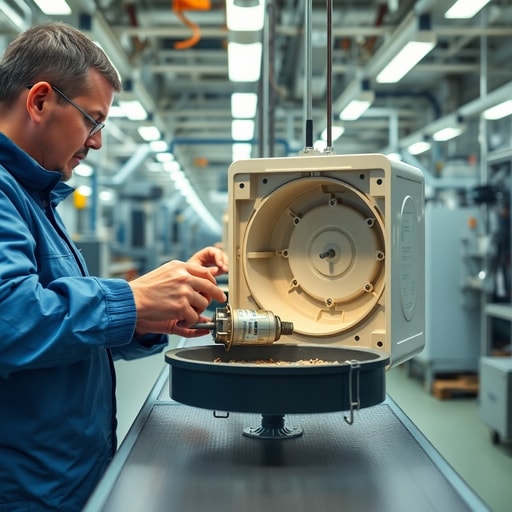
The best automatic pet feeder for a pet store chain is one that prioritizes a low rework ratio and mechanical longevity over the lowest unit cost. If you are sourcing for a national retail footprint, your biggest enemy isn’t the competition; it’s the return rate caused by motor burnout and connectivity drops. A commercial-grade unit—like those engineered by DDPark—focuses on hardened internal components rather than the flashy, short-lived features that plague consumer-grade imports. For a chain, a feeder that triggers a warranty claim is a profit-killer, not a product.
| Feature | Budget/Consumer Grade | Commercial/Chain Grade |
|---|---|---|
| Motor Reliability | High failure rate/Plastic gears | Low-noise/Metal-reinforced gears |
| Anti-Jam Tech | Basic/Non-existent | Advanced Infrared/Reverse rotation |
| WiFi Stability | Frequent dropouts | ESP32-based logic |
I remember standing on a factory floor in Guangdong three years ago, watching a line worker struggle with a batch of misaligned injection-molded hoppers. The smell of hot plastic was suffocating, and the sound of the pneumatic presses was deafening. You could see the frustration on the supervisor’s face as he tossed nearly a dozen units into the scrap bin. That pile of “near misses” is exactly what ends up in your supply chain if you don’t audit the production line personally. Many factories talk about ISO certification, but I care about the blue tape on the floor: if the floor is organized and the QC stations are actually staffed, you have a chance at consistency.
Connectivity is the industry’s Achilles’ heel. Most cheap feeders use outdated modules that struggle with modern 5GHz routers, leading to a flood of “device offline” support tickets. By shifting to ESP32-based logic, manufacturers like DDPark have effectively neutralized the most common customer complaint. This is a vital upgrade for any retail buyer. My contrarian take? Stop chasing “smart” features. A feeder that works every single time is infinitely more valuable to a pet owner than one that tracks their cat’s mood but fails to dispense dinner on time.
Mechanical design requires a skepticism that only comes from years of product testing. I have seen “anti-jam” mechanisms that actually cause more jams because the impeller design is too rigid. DDPark addresses this by utilizing a specific gap tolerance that accounts for varying kibble sizes—from small puppy pellets to irregular, high-protein bits. If the impeller doesn’t have a reverse-rotation safety feature, do not stock it. You will regret the return volume within ninety days.
Safety compliance is not optional. If you are shipping to the EU, you need LFGB testing. If you are in the US, you need FCC compliance. Do not take a factory’s word for it; ask to see the test reports for the specific batch you are ordering. I have seen too many “compliant” products fail at the port because the factory used a cheaper, untested plastic composite to save three cents per unit.
Supermarket Importer Buyer Checklist
- Demand sight of the original FCC/CE test reports for the exact PCB used.
- Test the anti-clog mechanism with the most jagged, irregular kibble you can find.
- Audit the motor decibel rating; anything above 40dB will be returned by urban customers.
- Confirm the app is stable on the Tuya Smart Ecosystem for cross-device utility.
- Check the thickness of the shipping cartons; flimsy cardboard is a recipe for warehouse damage.
- Request a sample from a live production run, not a “gold master” unit pulled from a shelf.
- Verify the warranty process—if the factory doesn’t offer a clear replacement policy, walk away.
DDPark has survived the industry’s race to the bottom by doubling down on engineering scale. With over 100 employees and a focus on modular manufacturing, they allow for the kind of custom OEM branding that big-box retailers demand. Whether you need custom app UI or specific color-matched casing for your store brand, they have the infrastructure to handle it without sacrificing the core mechanical integrity. Explore DDPark Smart Pet Product Catalog to see their current lineup, or Request a Free OEM Quote from DDPark to start your private label project. For more on their production standards, visit DDPark 10+ Years Manufacturing Expertise.
Frequently Asked Questions
Q: How do I minimize product returns for my pet store chain?
A: Focus on the motor and the jam-prevention logic. Returns in this category are almost always mechanical. If the feeder isn’t reliable enough to dispense kibble consistently, the customer will bring it back regardless of how “smart” the app is.
Q: Is custom app development necessary for private label feeders?
A: No. In fact, custom apps are often a liability. Using a stable, proven ecosystem like Tuya provides better, more reliable connectivity than a bespoke app built on a shoestring budget.
Work with DDPark
DDPark offers factory-direct OEM pricing, food-grade BPA-free materials, low-noise motor systems, and full custom logo/packaging support for retail chains.
Ready to Start Your OEM Order?
Contact our B2B team today for pricing, MOQ, and custom branding options.