Why Does My Self-Cleaning Litter Box Return Rates and How to Solve It: A 2026 Perspective
Here is a fact that keeps product managers awake: over 60% of consumer returns for automatic litter boxes occur within the first 14 days of ownership. If you are struggling with “why does my self-cleaning litter box return rates and how to solve it,” the answer rarely lies in the plastic housing. It lives in the invisible friction points of your supply chain. In 2026, the honeymoon phase for smart pet tech is over. Consumers no longer accept “smart” features that require a manual reset every time a cat enters the unit. They want appliances, not science projects.
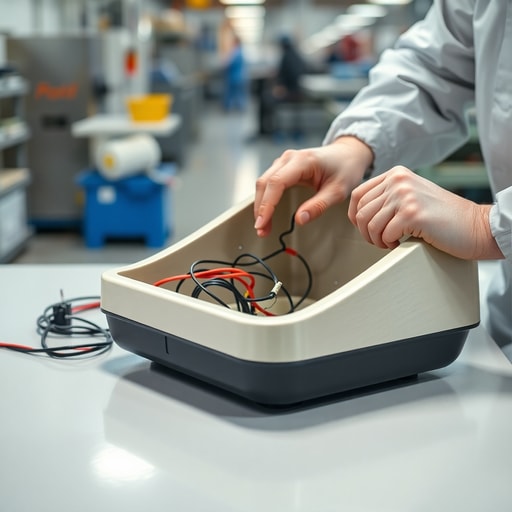
Walking the production floor in the Pearl River Delta, I hear the rhythmic *clack-whir* of stress-testing machines. It’s a sensory experience that tells you everything about your product’s future. If that sound is inconsistent, your return rate is already written in the logs. We’ve moved past the era where a shiny aesthetic could hide a hollow mechanical core. Today, your return rate is a direct reflection of your firmware’s patience and your motor’s thermal threshold.
The Counterintuitive Truth: Why Price Doesn’t Always Equal Performance
Many distributors operate under the dangerous assumption that premium materials equate to low return rates. I have seen units built with high-grade, BPA-free polymers that still end up in a landfill because the internal power management was an afterthought. The real culprit is often the “cost-saving” pressure placed on essential components. When you squeeze a manufacturer on unit price, they don’t cut the plastic; they cut the copper in the motor windings or the quality of the sensor arrays.
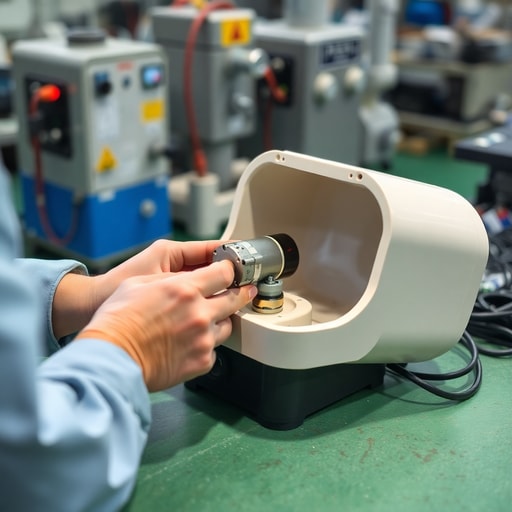
I recall a client who insisted on a 15% reduction in BOM cost. They switched to a generic stepper motor for the waste-raking mechanism. The result? A 400% spike in “motor stalled” errors within three months. The housing looked beautiful, but the internal torque was insufficient for heavy clumping litter. My personal opinion? Never compromise on the drive-train. If the machine cannot handle the worst-case scenario—heavy, wet, clay-based clumps—it will fail, and your customer will send it back.
Contrarian insight: sometimes, the most sophisticated sensor is the worst choice. Over-engineering your detection logic creates “false positives” where the machine stops simply because a cat’s tail flicked in the wrong direction. A simpler, more robust infrared barrier is often more reliable than a high-resolution camera system that gets confused by shadows or stray light.
Firmware: The Silent Killer of Customer Satisfaction
Distributors often treat firmware as an “install and forget” task. This is a fatal mistake in the current market. In 2024, the industry pivoted toward ESP32 modules, which finally stabilized basic WiFi connectivity. Yet, we still see massive return volumes because of poor debounce logic.
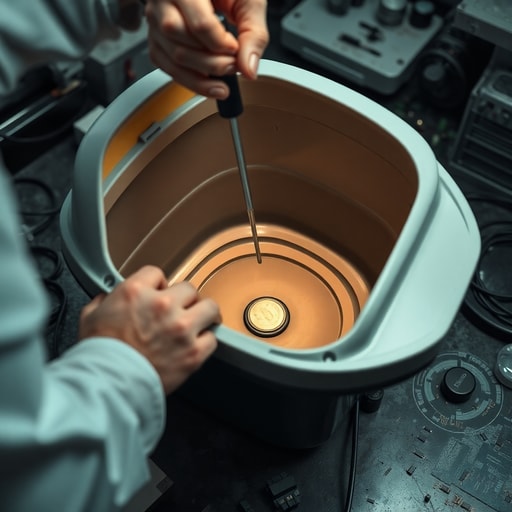
When the software is too sensitive, it treats every grain of sand as a mechanical obstruction. Your device enters a safety-pause loop, the cat gets spooked, and the owner gets frustrated. We solve this at the factory level by simulating “noisy” environments during the burn-in phase. We intentionally throw variable-sized debris into the gear train to see if the firmware can distinguish between a jam and a normal cycle. If your current OEM isn’t doing this, you are essentially shipping a return waiting to happen.
For those looking to scale, Explore DDPark Smart Pet Product Catalog to see how our engineering-first approach minimizes these failure points through rigorous testing.
The DDPark Philosophy: Zero-Defect Manufacturing
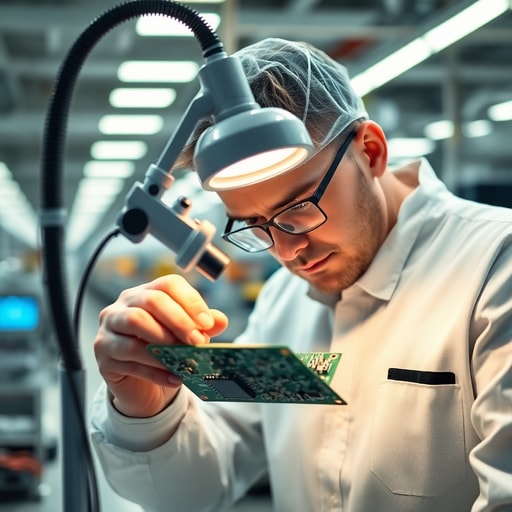
With over 100 employees and exports to 50+ countries, our philosophy centers on the idea that the factory floor is a laboratory. We don’t just assemble; we validate. When we produce smart feeders or litter boxes, we treat the hardware as a holistic ecosystem. An AOI (Automated Optical Inspection) camera on our line recently flagged a microscopic solder bridge on a batch of PCBs. That single catch prevented a thousand units from shipping with intermittent power failures.
If you are struggling with high return rates, ask your partner if they are testing under real-world conditions. Do they stress-test the magnetic pumps with calcium-heavy water? Do they run the auger motors at 110% load for 48 hours? We provide flexible MOQ for startups and distributors, ensuring that whether you are testing the market in Japan or scaling in the USA and Germany, you have access to the same level of quality control that powers our global operations. If you are ready to stabilize your supply chain, you can Request a Free OEM Quote from DDPark today.
Actionable Steps to Solve Your Return Rate Crisis
To solve the “why does my self-cleaning litter box return rates and how to solve it” dilemma, you must transition from reactive troubleshooting to proactive quality assurance. Follow this roadmap:
1. **Audit the Firmware Logic:** If your APP connectivity is spotty, you are losing customers. Ensure your units utilize stable, industry-standard modules like the ESP32.
2. **Inspect the Motor Windings:** If you see “Motor Stalled” errors, move away from budget-tier copper. Thermal protection is non-negotiable for high-torque tasks.
3. **Sensor Calibration:** Calibrate your anti-jam infrared detection for multiple litter types. A unit that works with clay but fails with wood pellets is a return waiting to happen.
4. **Partner for Longevity:** Leverage our DDPark 10+ Years Manufacturing Expertise to ensure your product is FBA ready and compliant with CE/FCC/RoHS standards.
The market has matured. Customers in 2026 demand a “set it and forget it” experience. If your litter box requires a manual reset every week, the return is inevitable. By focusing on the intersection of stable firmware and robust, high-quality components, you can flip the script on your return rates.
Frequently Asked Questions
Q: Why do self-cleaning litter boxes often get returned?
A: Returns are typically driven by sensor malfunctions, motor jams, or unstable APP connectivity. Most issues stem from poor PCB quality or inadequate firmware testing during the production phase.
Q: How can I lower my product return rate as a distributor?
A: Focus on partnering with manufacturers that prioritize firmware stability and rigorous component testing, such as ISO9001-certified facilities that utilize AOI camera inspection for all circuit boards.
Q: What is the most common hardware failure in automatic litter boxes?
A: Auger motor stalling is frequent, often caused by low-quality copper winding. Upgrading to motors with integrated thermal protection significantly reduces these failures.
Work with DDPark
We provide custom logo and packaging, stable Tuya connectivity, Matter protocol readiness, and advanced anti-jam infrared detection.
Ready to Start Your OEM Order?
Contact our B2B team today for pricing, MOQ, and custom branding options.