
Why Does My Interactive Pet Toy WiFi Disconnection and How to Solve It: A 2026 Troubleshooting Guide
Most “smart” pet toys currently on the market are essentially glorified paperweights held together by cheap firmware and hope. If you are asking why does my interactive pet toy WiFi disconnection and how to solve it, the answer is usually a combination of aggressive cost-cutting by manufacturers and a misunderstanding of how IoT hardware handles network congestion. The reality is that if your device drops its connection, it isn’t just “bad luck”—it is likely a hardware limitation baked into the circuit board during the rush to mass production.
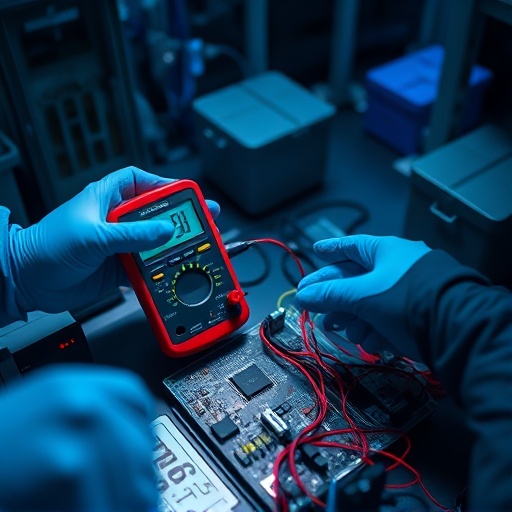
Standing on the factory floor in the Pearl River Delta, the air carries the sharp, metallic tang of solder and the constant, rhythmic clatter of plastic injection molds. I have spent twelve years watching the evolution of this industry, and the difference between a device that stays connected and one that fails is often a single, cheap capacitor. Manufacturers often swap out reliable WiFi modules for “white label” alternatives to shave pennies off the BOM (Bill of Materials). These components struggle with the heat generated by the device’s motor, leading to signal degradation that manifests as your persistent WiFi headache.
The Skeptic’s Guide to WiFi Stability
Do not let the marketing brochures fool you. Many interactive pet toys are built to survive the unboxing experience, not the humidity of a living room or the interference of a modern smart home. If your toy drops off the network, the culprit is often a thermal issue or an underpowered WiFi module that simply cannot handle the “handshake” required by modern, high-traffic routers.
I have personally seen production batches where the internal antenna was placed directly behind a metal motor housing. It’s a design oversight that guarantees signal interference. When you buy cheap, you are paying for a lack of engineering rigor. A robust device requires rigorous RF (Radio Frequency) testing, which most budget factories skip entirely to hit their shipping deadlines.
Troubleshooting Your Connection
Before you toss the device in the trash, try these professional-grade steps to stabilize your connection:
1. **Force the 2.4GHz Band:** Modern routers love “band steering,” which constantly shoves devices between 2.4GHz and 5GHz. Your pet toy is likely too primitive to handle the switch. Log into your router settings and create a dedicated 2.4GHz-only SSID for your IoT devices.
2. **Check for Heat Traps:** Is the device sitting on a carpet or against a radiator? Heat is the silent killer of WiFi modules. If the internal chip gets too hot, it will drop the connection to protect itself.
3. **Audit Your Power Adapter:** Most users recycle old phone chargers for their pet toys. This is a mistake. If the voltage fluctuates even slightly, the WiFi module will reset. Always use the factory-supplied power cable.
4. **Update the Handshake:** Check your APP for firmware updates. We push updates at DDPark specifically to improve how our devices handle “re-authentication” after a brief signal dip.
The Factory Reality: Why Quality Matters
Walking past the assembly lines, I often see the difference between a “fast” factory and a “good” one. A fast factory is a chaotic blur of workers rushing to solder components, ignoring the thermal properties of the PCB. A good factory—the kind we operate—takes the time to perform overnight stress tests. We monitor the connection logs of every unit in a simulated home environment.
My contrarian take? Most industry “smart” devices are over-engineered in software and under-engineered in hardware. You can have the best app in the world, but if your PCB supplier is using low-grade copper traces, your connection will never be stable. This is why we refuse to use the dirt-cheap modules that plague the current Amazon landscape. We prefer a slightly higher unit cost that results in a 99% uptime rate, saving our distributors from the nightmare of return logistics.
Checklist for Smart Pet Product Buyers
If you are sourcing for a brand or looking to stock your shelves, do not just look at the price per unit. Use this checklist to avoid the “3-month failure” trap:
* **Chipset Transparency:** Demand to know the exact WiFi module being used. If they say “generic,” walk away. Look for industry-standard modules like the ESP32.
* **Thermal Testing Data:** Ask the manufacturer if they conduct heat-soak testing on their circuit boards.
* **Firmware Support:** Does the factory have a dedicated software team, or are they using a pre-packaged, unchangeable SDK from a third party?
* **Yield Rate Documentation:** A transparent factory will show you their defect and return rates. If they claim “zero,” they are lying. Look for a manufacturer that tracks and improves upon their failure data.
If you are tired of the revolving door of returns and technical support tickets, it is time to look at hardware built with longevity in mind. Explore DDPark Smart Pet Product Catalog to see how we handle engineering differently. With over a decade in the sector, we know that a stable connection is the most important feature you can offer your customers. Learn more about our DDPark 10+ Years Manufacturing Expertise and why we prioritize stability over the race to the bottom.
Frequently Asked Questions
Why does my interactive pet toy WiFi disconnect every night?
This is frequently caused by your router’s automatic channel optimization. Routers often scan for less crowded channels at night and reboot their radio frequencies. Your pet toy, lacking a robust reconnection protocol, fails to “re-handshake” with the router, leaving it stranded offline.
Does the quality of the WiFi module affect connection stability?
It is the single most important factor. High-quality modules have better sensitivity to weak signals and superior heat dissipation, whereas low-grade modules will drop connections the moment they encounter minor network interference or temperature fluctuations.
How can I prevent WiFi drops in smart pet feeders?
Ensure a strong signal area, use a dedicated 2.4GHz network, and verify that the power supply is stable. Ultimately, the best prevention is sourcing hardware from manufacturers that prioritize high-grade internal components over low-cost assembly.
Work with DDPark
We provide food-grade BPA-free materials, low-noise motor systems, anti-jam infrared detection, and custom logo and packaging solutions for your brand.
Ready to Start Your OEM Order?
Contact our B2B team today for pricing, MOQ, and custom branding options.