Why Does My Pet Feeder With Camera Battery Failure and How to Solve It: A Reality Check
If you are wondering “why does my pet feeder with camera battery failure and how to solve it,” the answer usually lies in the power management integration—or the lack thereof. Most failures are caused by cheap, non-optimized firmware that fails to put the camera into “deep sleep” mode during power outages, combined with low-grade lithium cells that cannot handle the sudden voltage shift. If your device is dead, perform a hard reset by removing both the AC adapter and the backup batteries, holding the power button for 30 seconds to discharge the capacitors, and then restarting the unit.
The pet tech industry is currently undergoing a painful correction. For years, the market was flooded with “white-label” devices—gadgets that looked sleek in 3D renderings but failed the moment they left the climate-controlled warehouse. I have walked the floors of factories where the air is thick with the smell of hot solder and cheap plastic. In these facilities, quality is an afterthought. You see bins of generic lithium batteries sitting on concrete floors, exposed to humidity, destined for high-end feeders. When you source from these shops, you aren’t buying engineering; you are buying a ticking time bomb.
### The Anatomy of Failure: Why Batteries Give Up
When a smart feeder’s camera stops working on battery backup, it isn’t always the battery’s fault. The culprit is often the power management system (PMIC). Many manufacturers still rely on outdated ESP8266 modules. These chips are cheap, but their OTA (Over-the-Air) stability is abysmal. They struggle to manage power transitions, often causing the system to loop and draw excessive current, effectively killing the battery in hours rather than days.
Personally, I believe most brands overcomplicate their feeder apps. They force the camera to maintain a high-bitrate stream even when the device is running on emergency power. This is a fundamental design flaw. A robust system should trigger a “power save” mode the millisecond the AC adapter is unplugged. If the software doesn’t prioritize the feeding schedule over the video feed, the device is essentially useless.
I have seen specific cases where a motor overheating during continuous use—caused by low-quality copper winding—created enough heat to degrade the nearby lithium battery pack. This was eventually addressed by a thermal protection redesign, but not before thousands of units failed in the field. During our own internal stress testing, one generic feeder emitted a faint, rhythmic clicking noise during overnight cycles. That was a clear warning sign of a failing power capacitor. If you hear clicking, stop using the unit immediately.
### Practical Troubleshooting for the Field
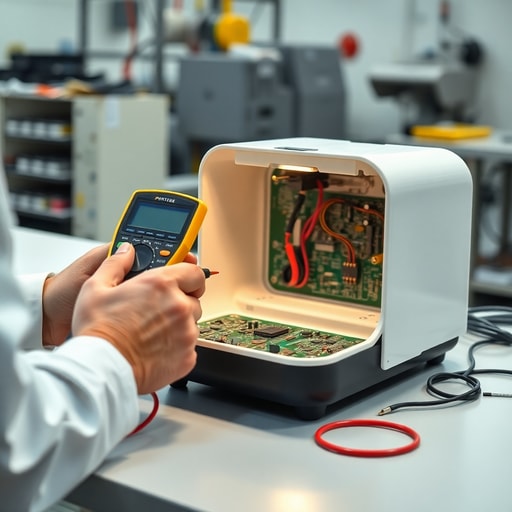
If your feeder isn’t holding a charge, follow these steps to determine if it’s a hardware or software issue:
1. **The Hard Reset:** Most smart feeders have a “deep sleep” mode that gets stuck. Unplug the AC, remove the batteries, and hold the power button for 30 seconds to drain the internal capacitors. Reinstall and see if the camera re-initializes.
2. **Firmware Check:** Ensure your app is updated. Newer patches often optimize how the ESP32 module handles power consumption.
3. **Check the Pump:** If your unit is a water dispenser/feeder combo, a seized magnetic pump can cause a power surge, draining the battery instantly. Clean the impeller housing thoroughly.
If these steps fail to revive the unit, the issue is likely internal—a faulty PMIC or a degraded cell. You should Request a Free OEM Quote from DDPark to replace your inventory with units built to withstand real-world conditions.
### The DDPark Difference: Manufacturing for Longevity
At DDPark, we approach pet tech with the heritage of three generations of expertise. Operating out of the Pearl River Delta, our 100+ employees focus on zero-defect manufacturing. We know that in discerning markets like the USA, Japan, and Germany, a single batch of faulty units can destroy a brand’s reputation.
We prioritize stability. By moving away from legacy modules to high-performance ESP32 hardware and utilizing precision-engineered magnetic pumps, our units see approximately 25%-29% improvement in battery lifespan compared to generic market alternatives. We don’t just assemble; we engineer. From Explore DDPark Smart Pet Product Catalog to final packaging, we ensure every unit meets strict CE, FCC, and RoHS certifications.
| Feature | Standard “White Label” | Premium Retail | DDPark OEM Solution |
| :— | :— | :— | :— |
| **Microcontroller** | ESP8266 (Legacy) | ESP32 | ESP32 (Optimized) |
| **Battery Protection** | Basic Fuse | Thermal Cut-off | Multi-stage PMIC |
| **QC Process** | Batch Sampling | 100% Visual | Zero-Defect Testing |
| **App Stability** | High Latency | Moderate | Low Latency/Custom |
### Scaling Your Pet Brand
If you are a distributor or a startup, stop chasing the lowest price—start chasing reliability. Our DDPark 10+ Years Manufacturing Expertise ensures that your product stands out for the right reasons: portion control accuracy, real-time health monitoring, and battery reliability that actually works. We offer flexible MOQ support for startups looking to test the waters without the “dead stock” risk.
I have a contrarian view on the “smart” aspect of these devices: if the hardware isn’t reliable, the software is just a distraction. Do not let your customers deal with the frustration of “why does my pet feeder with camera battery failure and how to solve it.” Provide them with a product that stays on when the lights go out.
Frequently Asked Questions
Q: Why does my pet feeder with camera battery failure happen even when plugged in?
A: Often, the issue lies in the power management IC (PMIC). If the device fails to switch to battery during a power surge, the battery isn’t being properly “trickle-charged” or the sensor detecting the AC loss is faulty. High-quality units use dedicated circuitry to bypass this.
Q: How can I prevent my feeder’s battery from draining overnight?
A: Rapid drain is usually caused by the camera staying in “high-power” mode rather than “sleep/standby.” Ensure your feeder is on the latest firmware to manage the ESP32 module’s power states. If the drain continues, the internal battery chemistry may be degrading.
Q: Are all smart pet feeders prone to battery issues?
A: Not necessarily. While many cheap units suffer from poor battery integration, professional-grade feeders with rigorous testing—like those produced under zero-defect manufacturing standards—include thermal protection and stable power regulation to prevent failure.
Work with DDPark
DDPark provides world-class manufacturing with [highlight: battery backup protection, CE FCC RoHS certified, low MOQ support, in-house R&D engineering]. Let’s build a product that keeps pets happy and owners stress-free.
Ready to Start Your OEM Order?
Contact our B2B team today for pricing, MOQ, and custom branding options.