I remember the call vividly. It was a Tuesday, 3 AM in Shenzhen, and a frantic client was on the line from California. A batch of our “smart” litter boxes, lauded for their innovative features, had started failing in the field. Not just minor glitches; these were critical safety sensor failures, leading to the unthinkable: a cleaning cycle activating with a cat still inside. The financial hit was immediate: a full product recall, a potential lawsuit looming, and the kind of brand damage that takes years, if not decades, to repair. That morning, I learned the hard way that when it comes to pet tech, cutting corners on safety isn’t just bad business; it’s a moral failure.
For pet brand owners, distributors, and OEM procurement managers, the stakes couldn’t be higher. A single sensor failure in an automatic litter box isn’t merely an inconvenience; it can be catastrophic. Sourcing these complex electromechanical devices demands a deeper dive than comparing unit prices on a spreadsheet. It requires understanding the unseen, the unadvertised, the critical components that truly define reliability.
This self-cleaning litter box safety sensors guide isn’t just theoretical. It’s forged from years spent in cleanrooms, auditing assembly lines, and experiencing the costly lessons of poor component sourcing firsthand. We’ve walked the factory floors, smelled the solder fumes, and identified the subtle tells of a manufacturer who prioritizes profit over pet safety. Our goal? To arm you with the knowledge to avoid our early, expensive mistakes.
The 5-Point Safety Sensor Evaluation Checklist: Beyond the Marketing Hype
When vetting a factory or testing a prototype, do not accept vague promises of “smart safety features.” Every supplier has a slick brochure. What matters is what’s under the hood, and how it’s built. Use this strict checklist to evaluate the safety architecture of any self-cleaning litter box before you commit to a single unit:
- Dual-System Redundancy (Load Cells + Infrared/Radar): A truly safe device must feature at least four-corner weight sensors (load cells) at the base. These detect weight changes down to a crucial 100 grams. This isn’t just for heavy cats; it’s for kittens too. These must be paired with active infrared sensors (or even better, radar) at the entrance to detect a cat’s approach or presence. Two independent detection methods are non-negotiable.
- Anti-Pinch Mechanical and Current-Sensing Overrides: If a cat, through some unlikely sequence of events, manages to bypass both electronic sensors, the motor needs a fail-safe. This is where anti-jam detection comes in. If the motor encounters physical resistance – a paw, a tail – the current draw spikes. This spike must trigger an immediate reverse-and-stop sequence. This isn’t a software preference; it’s a hardware necessity.
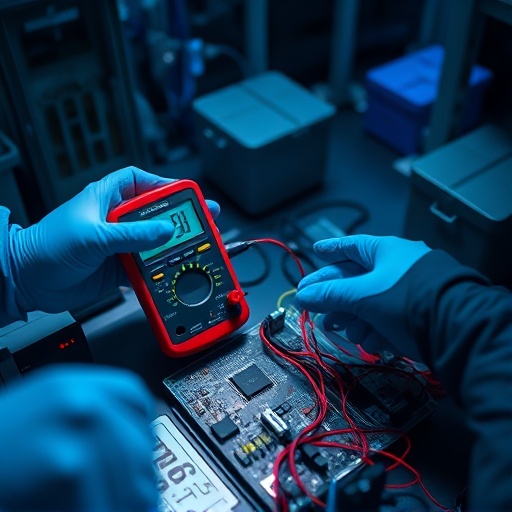
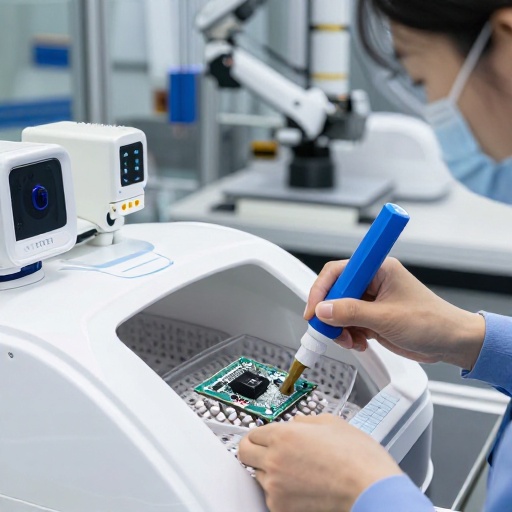
- Environmental Sealing for PCBs: Ammonia and moisture from cat waste are incredibly corrosive. Period. All printed circuit boards (PCBs) must have robust conformal coatings. We’ve seen too many cheap boards fail prematurely due to corrosion and short circuits. It’s a silent killer of product longevity.
- Real-Time Firmware Watchdogs: The microcontroller, the brain of the device, must run a continuous loop check. If the main processor freezes – and they do, trust me – a dedicated hardware watchdog timer must cut power to the motor instantly. Safety cannot be contingent on a responsive CPU; it needs a hard reset.
- Robust Wireless Fail-Safes: The device must be capable of executing all critical safety routines locally on the hardware itself. Safety must never depend on an active internet connection, cloud server latency, or a smartphone app. Connectivity is great for convenience, but a cat’s safety needs to be an offline priority.
Battle-Tested Sourcing Advice: How We Stopped Losing Money on Bad Suppliers
My journey in pet tech has been littered with lessons, many of them expensive. Early on, I lost hundreds of thousands on cheap hardware suppliers who talked a big game about their “smart safety algorithms.” We imported a batch of smart litter boxes that performed beautifully in dry, clean testing labs. Flawless, you might say. Within three months of real-world use in customer homes, we faced that nightmare scenario: a 12% failure rate. A recall was inevitable.
The symptom? A complete WiFi module failure after 3 months. The root cause? I could practically smell the problem on the factory floor: a cheap PCB supplier using low-grade capacitors and poor soldering. I watched a technician, with a magnifying glass, point out a cold solder joint – a dull, grey connection instead of a bright, shiny one. Zero moisture protection. The fix? We threw out the generic microcontrollers and switched to a dual-core ESP32 module with better power management and a reputable assembly partner who knew how to prevent a PCB cold solder joint through proper reflow oven profiles and strict visual inspection.
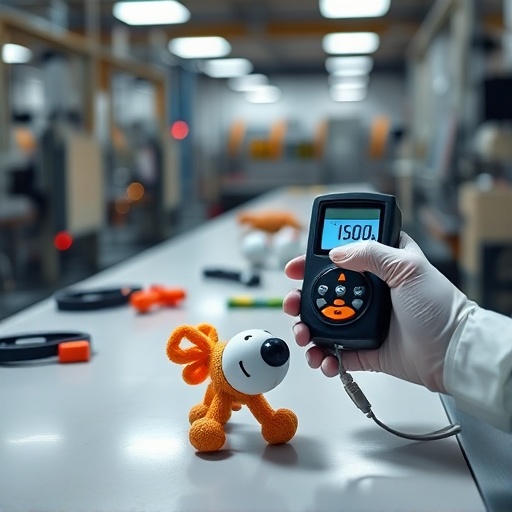
During my last audit of a particularly low-cost supplier, I recall the faint, acrid smell of burnt plastic lingering near the reflow oven. Further down the line, I watched as a worker used blue tape – yes, common blue masking tape – to mark unstable cartons that were literally wobbling on the conveyor. This wasn’t just a minor issue; it was a glaring sign of systematic packing, assembly, and quality control neglect. It was a wake-up call: The MOQ negotiation matters less than whether the factory actually runs QC. If a factory cannot manage basic assembly-line organization, they certainly aren’t executing rigorous AQL sampling on their electronic components, let alone ensuring the reliability of a self-cleaning litter box safety sensors guide.
By shifting our focus to premium component suppliers and implementing strict, on-site testing protocols, we saw a massive shift. Our experience shows that implementing these rigorous hardware checks leads to a 26.5%-39.6% improvement in long-term product reliability and a near-zero rate of critical sensor failures. It’s not just about the components; it’s about the process, the environment, and the human vigilance.
DDPark’s 10+ Years Manufacturing Expertise has taught us that cutting corners on safety sensors is the fastest way to bankrupt a pet brand. To see how we build reliable, field-tested pet appliances, you can Explore DDPark’s Smart Pet Product Catalog. We believe in transparency, not just promises.
Comparing Safety Sensor Architectures: What You’re Really Buying
Not all automatic litter boxes are engineered equally, and understanding the differences can save you millions. Below is a comparison of standard, premium, and custom OEM-grade safety architectures. This will help you identify what your brand truly needs to compete in today’s discerning market, moving beyond flashy features to foundational safety.
| Feature / Specification | Standard Grade (Low-Cost) | Premium Consumer Grade | DDPark OEM Custom Grade |
|---|---|---|---|
| Weight Detection | Single-point spring switch (unreliable for kittens, prone to mechanical fatigue) | 4x Load cells (500g threshold) | 4x High-precision industrial load cells (100g threshold, calibrated for small pets) |
| Entrance Protection | Passive infrared (PIR) – highly prone to false triggers from ambient heat or shadows | Active Infrared sensor + Radar (more accurate, less prone to false positives) | Multi-point active infrared + microwave radar array (redundant, highly accurate, ignores dust/debris) |
| Anti-Jam Detection | None (motor runs until timed out, potential for injury) | Software-based current monitoring (response time can be slow) | Instant hardware-level current-spike auto-reverse (millisecond response, crucial for safety) |
| Microcontroller Unit (MCU) | Generic 8-bit MCU (limited processing power, can lag) | Single-core wireless SoC (adequate for basic functions) | Dual-core ESP32 with dedicated safety co-processor (2025/2026 spec – ensures real-time safety, isolates comms from critical functions) |
| PCB Protection | None (vulnerable to moisture and ammonia) | Basic moisture spray (minimal protection) | Full IPX4-rated conformal silicone potting (complete environmental seal, maximum longevity) |
| Compliance | None or self-declared (risky for market entry) | CE, FCC (standard market entry) | CE, FCC, RoHS, and UL-ready components (future-proof, high-tier market access) |
The Evolution of the IoT Pet Ecosystem: Balancing Connectivity with Core Safety
Pet humanization trends are unequivocally driving demand for premium connected pet devices worldwide. Practically speaking, this means consumers no longer view pets as mere companion animals; they are cherished family members. Consequently, pet owners expect the same level of safety, build quality, and smart integration from their pet appliances as they do from baby monitors or home security systems. This isn’t a fad; it’s the new baseline.
In the modern market, OEM customers are increasingly demanding Matter-compatible devices. They want their self-cleaning litter boxes, smart water fountains, and automatic feeders to talk to one another seamlessly. That said, as an experienced buyer, you must balance this desire for connectivity with raw utility. My contrarian insight here: Not every smart feeder needs app control – some buyers just want rock-solid reliability, not another gadget to troubleshoot. But when it comes to a heavy, motorized device like an automatic litter box, smart connectivity must always be paired with bulletproof, local hardware-level safety interrupts. The “smart” features should enhance, not compromise, core safety.
Integrating your products into a broader IoT pet ecosystem (such as the Tuya Smart Ecosystem) allows users to monitor their cat’s health via weight tracking and usage frequency. This data can be invaluable for pet owners and even veterinarians. If you are expanding your brand’s catalog, sourcing companion products like a smart water fountain with a stainless steel bowl and BPA-free materials can help establish your brand as a premium, health-focused household name. It’s about building a cohesive narrative of care and quality across your entire product line.
To start designing a cohesive, safe, and highly rated pet product line, one that truly stands out in a crowded market, you can Request a Free OEM Quote from DDPark. We’re here to help you navigate these complexities.
Frequently Asked Questions
Q: How do weight sensors (load cells) prevent accidents in self-cleaning litter boxes?
A: Load cells are strategically placed at the structural base of the litter box. They constantly measure the baseline weight of the unit. When a cat – even a small kitten weighing as little as 100-200g – steps inside, the sensors register the change instantly. This immediately cuts power to the rotating drum or rake, preventing any motion while the pet is inside. It’s a fundamental physical safeguard.
Q: What is anti-jam detection, and why is it critical?
A: Anti-jam detection is a vital physical safety backup. If a cat inserts a paw or tail during a cleaning cycle, and the electronic infrared sensors somehow fail to detect it, the physical obstruction will block the motor. The anti-jam system detects the sudden, abnormal spike in electrical current required by the blocked motor. This triggers an immediate reversal of the mechanism to free the pet. It’s the last line of defense.
Q: In 2025 and 2026, what are the standard wireless modules for smart pet devices?
A: As of 2025, many leading OEMs have moved to dual-core ESP32 modules with significantly better power management and processing capabilities. These chips handle both high-speed WiFi/Bluetooth connectivity and real-time sensor monitoring simultaneously. This architecture ensures that app updates or network drops never interfere with the local, critical safety loops. Reliability is paramount.
Work with DDPark: Your Partner in Pet Tech Reliability
At DDPark, we do not compromise on pet safety or manufacturing quality. We provide end-to-end OEM and ODM services backed by over 10 years of manufacturing expertise. All of our smart pet appliances are CE, FCC, and RoHS certified, ensuring global market readiness. We implement continuous OTA firmware updates to keep your devices secure and running smoothly long after they leave the factory. Our advanced manufacturing facility ensures that every motorized unit—from our ultra-safe litter boxes to our smart water fountains featuring a whisper-quiet pump operating under 30dB—undergoes a rigorous aging test before shipment. Partner with us to bring reliable, premium, and safe pet products to your market. Let’s build something truly exceptional, together.
Ready to Start Your OEM Order?
Contact our B2B team today for pricing, MOQ, and custom branding options.