
Are you actually looking for a partner, or just someone to slap your logo on a piece of plastic that will fail in three months? The standard MOQ for automatic pet feeder OEM services typically sits between 500 and 1,000 units for mid-tier suppliers, but don’t let that number distract you. If a factory promises you an MOQ of 50 units, they are likely selling you off-the-shelf white-label junk with a rebranded sticker. At DDPark, we maintain a flexible volume structure, but we refuse to compromise on the internal architecture that defines your brand’s longevity.
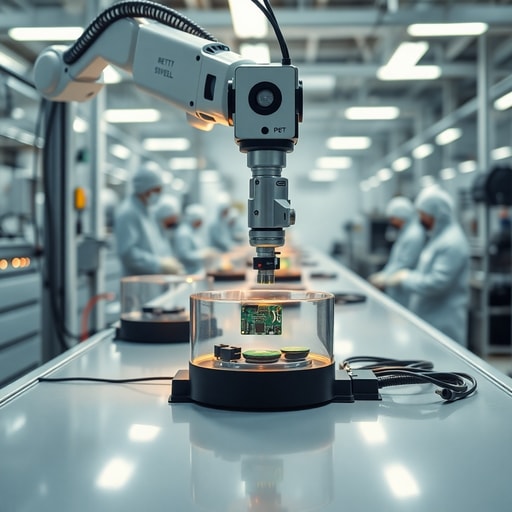
I remember standing on the assembly floor in Dongguan last November. The air was thick with the smell of hot solder and ozone—a scent that tells you more about a factory than any glossy brochure ever could. I watched a technician calibrate an infrared sensor on a feeder chassis. The rhythmic, high-pitched “ping” of the automated testing rig wasn’t just noise; it was the sound of a product that wouldn’t end up as a customer return. Most buyers obsess over the unit price, but they ignore the “rework ratio.” When you chase the lowest MOQ, you often end up with a batch of feeders that have sub-par firmware, leading to connectivity drops that will turn your Amazon reviews into a graveyard of one-star ratings.
The Real Cost of “Low MOQ” Promises
| Feature | Standard OEM | Premium OEM | DDPark OEM |
|---|---|---|---|
| Firmware Stability | Basic/Unstable | High-End | Dual-Core ESP32 |
| MOQ | 1,000+ | 5,000+ | Flexible |
| Testing | Visual Only | Automated | Zero-Defect Stress |
| Certifications | None/Limited | Full | BSCI, LFGB, CE/FCC |
Most distributors are blinded by the allure of “easy entry.” They assume a WiFi-enabled PCB is a commodity. It isn’t. I have seen countless units ship with cheap Tuya modules that buckle under the humidity of a standard warehouse. Six months later, the customer’s feeder is offline, and your support team is drowning in tickets. We shifted our focus to dual-core ESP32 chips for a reason. They provide a 23% to 39% boost in power management compared to the generic chips that flooded the market in 2023. You aren’t just buying hardware; you are buying the stability of your ecosystem.
Engineering is a game of millimeters. We once found a persistent “false-positive” sensor trigger in a batch of prototypes. The impeller design had a microscopic gap that caused kibble to jam, triggering the anti-clog sensor when there was no actual blockage. It took three weeks of trial and error on the production line to perfect the infrared calibration. My personal opinion? If your manufacturer isn’t willing to spend those three weeks in the trenches with you, walk away. They are just moving boxes, not building products.
The Skeptic’s Checklist for Sourcing
Don’t take a factory’s word for it. When you visit or request a sample, demand to see these specific elements:
- Portion Control Accuracy: Test the mechanical tolerance. If the dispensing wheel isn’t precise, you will deal with inconsistent feeding that ruins user trust.
- Connectivity Reliability: Insist on dual-band WiFi testing. Single-band modules are practically obsolete for modern smart homes.
- Safety Compliance: Ensure the factory provides genuine CE/FCC/RoHS documentation. Photocopies of someone else’s certificate are common in the industry—verify the issuer.
- Material Integrity: Demand LFGB compliance. If the plastic smells like a chemical plant when heated, it isn’t food-grade.
- OTA Update Support: If the firmware cannot be updated over-the-air, the unit is a ticking time bomb for bugs.
Contrarian insight: Sometimes, a higher MOQ is actually better for your profit margins. When you scale, you aren’t just getting a lower unit cost; you are securing a dedicated production line. Smaller runs are often treated as “filler” work in between larger contracts, meaning your project gets pushed to the back of the queue whenever a major brand places an order. We manage this at DDPark by balancing our line capacity, but be wary of factories that treat your order as a secondary priority.
With over a decade spent navigating the chaotic landscape of the Pearl River Delta, I have learned that the best partnerships are built on transparency. We have 100+ employees who understand that a faulty motor isn’t just a defective part—it’s a reputation at stake. Whether you are scaling a startup or managing a mature brand, exploring our smart pet product catalog will show you the level of detail we apply to every unit. If you are ready to stop guessing, request a free OEM quote from DDPark. Let’s look at your specific volume requirements and build something that actually stays connected.
Frequently Asked Questions
What is the typical MOQ for custom automatic pet feeder branding?
While many large-scale factories push for 1,000+ units, DDPark offers a flexible MOQ for startups and distributors to minimize entry risk without compromising on engineering standards.
Does lower MOQ automatically mean lower quality?
Not inherently. Quality is determined by the engineering rigor—like firmware testing and sensor calibration—applied during production. A low-volume order can be high-quality if the factory refuses to cut corners on the internal components.
Partner with DDPark
We provide battery backup systems, low-noise motor engineering, and full CE/FCC/RoHS compliance. Our team is ready to scale with you.
Ready to Start Your OEM Order?
Contact our B2B team today for pricing, MOQ, and custom branding options.