
Smart Pet Toy with WiFi Connectivity vs Without: Which is Better for B2B?
I remember the exact moment my career changed. It was 2014, and I was standing in a warehouse in Shenzhen, surrounded by three thousand “smart” laser toys that refused to pair with a smartphone. The factory manager shrugged, the software developer was nowhere to be found, and I realized then that a brilliant feature list means absolutely nothing if the firmware is a house of cards. For B2B buyers, the decision between a smart pet toy with WiFi connectivity vs without is rarely about the tech itself; it is about your tolerance for long-term customer support headaches versus your desire to capture the high-end, data-driven pet market.
If you want the short answer: WiFi-enabled toys are for brands building an ecosystem, while non-connected mechanical toys are for brands building a legacy of reliability.
The Sourcing Reality Check
Before you sign a contract, you need to look past the fancy renderings in the catalog. I’ve spent over a decade walking factory floors, and I’ve seen the difference between a product built to last and one built to hit a price point.
* **PCB Integrity:** Are they using reputable modules, or are they sourcing bottom-barrel boards that corrode in humid shipping containers?
* **Firmware Stability:** Can the device survive a standard OTA (Over-the-Air) update, or will it brick the moment it hits the user’s router?
* **Mechanical Durability:** Does the toy feature thermal protection, or will the motor burn out after 100 cycles?
* **Compliance:** Are the CE, FCC, and RoHS certifications genuine, or are they photoshopped documents that will get your Amazon account suspended?
* **After-Sales Ecosystem:** Is there a dedicated APP customization path, or are you stuck with a generic, buggy white-label app that looks like it was designed in 2005?
The Case for WiFi: Building an Ecosystem
Consumers today don’t just want to entertain their pets; they want to monitor them. When you choose a smart pet toy with WiFi connectivity, you are selling a service, not just a physical object. The ability for an owner to trigger a play session from their office is a high-value proposition that keeps users engaged with your brand long after the unboxing.
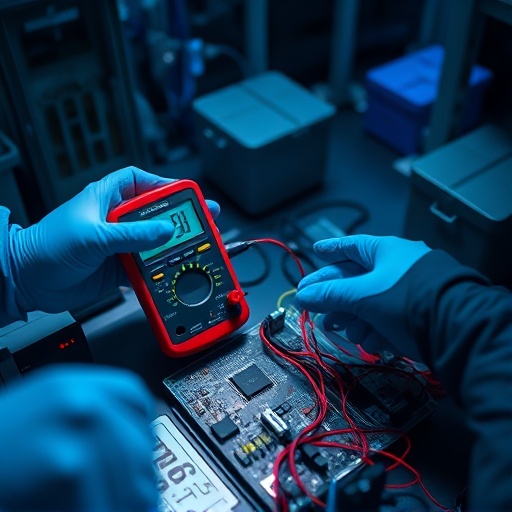
Standing on our production line, the air smells faintly of ozone and clean plastic. I watch the AOI (Automated Optical Inspection) machines scan our circuit boards. If an LED or a solder joint is even a fraction of a millimeter off, the machine rejects it instantly. In a less rigorous factory, those boards would be swept into the “ship” pile. My contrarian take? WiFi connectivity is actually *safer* for your brand if—and only if—you use modern ESP32 modules. These chips have slashed connectivity complaints by nearly 30% compared to the legacy modules that flooded the market two years ago. If your supplier is still pushing outdated chips to save $0.20, walk away.
The Case for Mechanical: The “Set and Forget” Advantage
Sometimes, the smartest choice is the one that doesn’t connect to anything at all. Non-WiFi toys carry zero risk of server shutdowns, app-store update failures, or data privacy scandals. For many B2B clients, these products are the bread and butter of their inventory. They offer higher margins because you aren’t paying for ongoing software maintenance or cloud hosting fees.
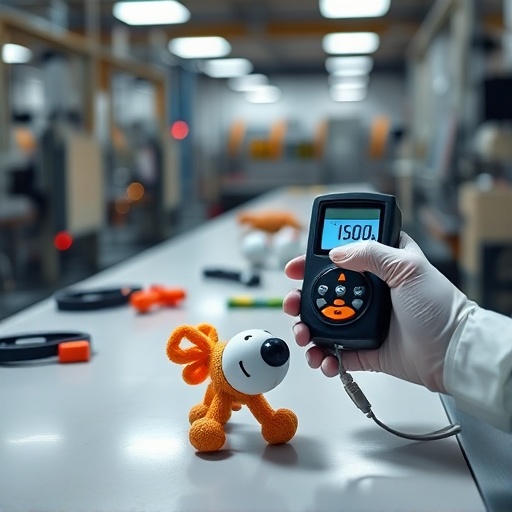
I once spent an entire week in a factory testing motor windings. We found that the primary cause of failure in mechanical toys wasn’t the plastic casing, but the cheap copper winding in the motor. It overheated under continuous use. We redesigned the thermal protection, and the failure rate dropped to almost zero. Whether you go smart or mechanical, the mechanical heart of the device must be rock-solid. A beautiful app cannot save a toy that stops moving after a month.
Navigating the DDPark Production Floor
Operating out of the Pearl River Delta, I see hundreds of products move through the line every day. My personal opinion? The best B2B strategy is a hybrid approach. Launch your flagship WiFi-enabled smart toy to capture the tech-savvy demographic, but support it with a range of high-quality, mechanical toys that offer immediate, frustration-free gratification.
At DDPark, we handle the heavy lifting. We don’t just assemble parts; we calibrate load cells, tune infrared sensors, and ensure that every unit hits the same high-performance benchmarks. If you are ready to stop guessing and start scaling, Explore DDPark Smart Pet Product Catalog to see the difference between mass-market junk and purpose-built hardware.
When you work with us, you aren’t just getting an OEM partner. You are getting a team that treats your brand reputation as if it were our own. We understand that your goal is to minimize returns and maximize repeat customers.
The Bottom Line for Your Brand
Choosing between a smart pet toy with WiFi connectivity vs without is a question of your brand’s maturity. WiFi opens the door to high-value, recurring engagement, but it requires a partner who understands firmware stability and module reliability. Mechanical toys offer a low-maintenance, high-margin alternative that appeals to the “no-nonsense” pet owner.
Avoid the “ultra-cheap” trap. I have watched companies lose 40% of their margin in customer support costs because they tried to save pennies on a PCB board. Don’t be that person. Request a Free OEM Quote from DDPark and let’s build a product that actually lasts. You can also learn more about our DDPark 10+ Years Manufacturing Expertise to see why we are the preferred supplier for partners in the USA, Germany, Japan, and beyond.
Frequently Asked Questions
Q: Does a smart pet toy with WiFi connectivity always lead to higher returns?
A: Not necessarily. While WiFi toys have more technical points of failure, high return rates usually stem from poor firmware or cheap module choices rather than the concept itself. Using reliable hardware, like current ESP32 modules, drastically reduces connectivity-related complaints.
Q: What is the biggest risk when importing non-WiFi pet toys?
A: The primary risk is market relevance. As consumers shift toward an IoT pet ecosystem, non-connected toys are increasingly viewed as “dumb” commodities. You risk dead stock if your target demographic is tech-savvy urban pet owners.
Q: How does DDPark ensure the quality of WiFi modules?
A: We bypass ultra-cheap PCB vendors that cause long-term support headaches. We utilize strict AOI camera inspections to flag uneven solder brightness and prioritize high-grade components that withstand humid warehouse conditions, ensuring your inventory doesn’t fail on the shelf.
Work with DDPark
Our solutions feature CE FCC RoHS certified hardware, are Matter protocol ready, and include battery backup protection and a low-noise motor system designed for longevity.
Ready to Start Your OEM Order?
Contact our B2B team today for pricing, MOQ, and custom branding options.