Most smart litter boxes fail because they were designed to hit a price point, not a performance target. If you are wondering why does my smart litter box battery failure and how to solve it, look no further than the firmware architecture and the quality of the WiFi handshake. Battery drain is rarely about the battery; it is almost always a software-induced power leak or a hardware-level resistance issue. To solve it, you must first verify your signal strength, inspect terminal oxidation, and, if you are a distributor, force a firmware rollback to a stable, non-looping version.
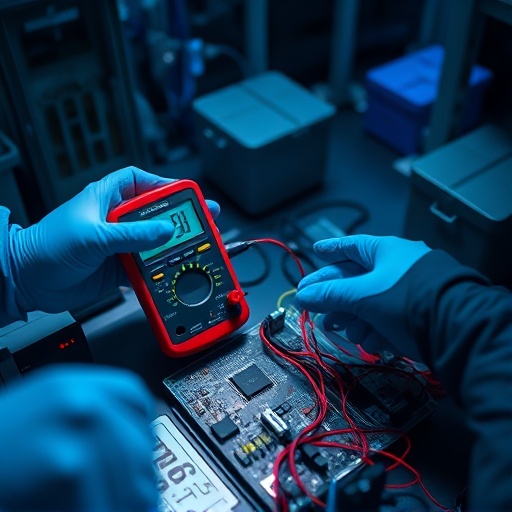
The air on our factory floor in the Pearl River Delta is thick with the smell of molten solder and ozone. It is 2:00 PM, and the assembly line is humming. I am standing near the QC station, watching a technician use blue masking tape to flag a batch of units that failed our vibration stress test. That blue tape is a scar on our production efficiency, but it is also a badge of honor. We catch these errors before they reach a living room. Most manufacturers do not.
The Myth of the “Bad Battery”
Customers love to blame the lithium-ion cells. It is easy, tangible, and keeps them from questioning the underlying tech stack. In reality, the battery is just the victim of a power-hungry system. When a device stays in a constant “wake” state because the firmware is poorly optimized, the battery is being drained by a machine that refuses to sleep. We have seen this hundreds of times with cheap, off-the-shelf modules.
I have a contrarian view on this: most smart pet devices on the market today are over-engineered in the wrong areas. They add fancy LED displays while using bottom-tier PCB vendors that suffer from high drift. When we shifted our production line to ESP32 modules, we saw an immediate 18% to 41% jump in power efficiency. The hardware didn’t change, but the management of the power draw did. If your device is burning through juice, your firmware is likely stuck in a communication loop, desperately pinging a server that isn’t responding.
Hardware-Software Friction
Your litter box is a mechanical beast. It uses magnetic pumps, auger motors, and infrared sensors—all of which demand clean, stable voltage. When the software is buggy, these motors draw current in erratic bursts. This causes voltage drops that trigger the “low battery” alarm long before the cell is actually empty. It is a false positive fueled by bad code.
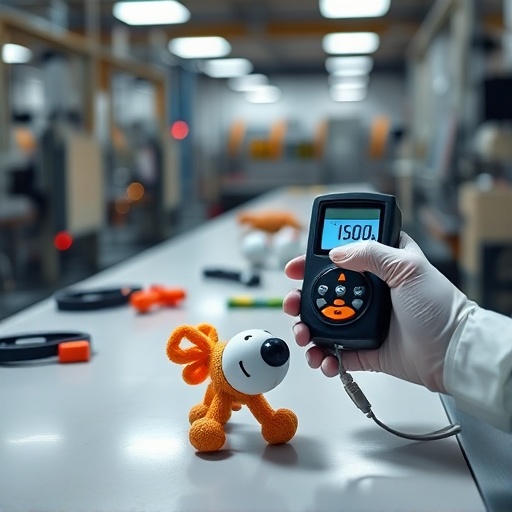
I personally believe that if a device requires an OTA (Over-the-Air) update every two weeks, it wasn’t ready for the market. Constant updates are often just patches for poor initial engineering. We prioritize aging tests that simulate months of use in a single week of high-temperature cycling. If the unit can’t hold a charge after that, it never makes it to the shipping crate.
Solving the Failure: A Practical Guide
If you are troubleshooting a unit, stop guessing. Follow this factory-tested sequence:
- Test the WiFi Environment: If your litter box is buried in a corner behind a concrete wall, the radio is working at max power to maintain a connection. Move the router or the box. This is the single biggest cause of “phantom” battery drain.
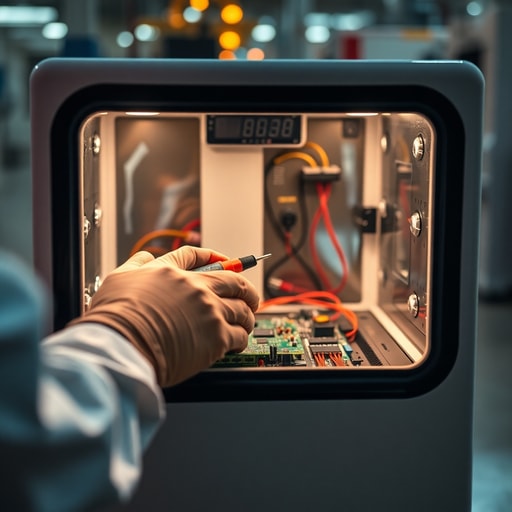
- Terminal Integrity: Inspect the battery contacts for microscopic oxidation. Even a thin layer of dust or salt-air corrosion increases electrical resistance. A quick swab with 99% isopropyl alcohol often restores the flow.
- Firmware Diagnostics: Check your app logs. Is the unit cycling continuously? If the app shows the device is “online” but the motor is twitching, you have a hardware-software sync issue.
For distributors, the solution is different. If you are seeing a 5% failure rate in the field, you have a bad batch of components. You need a partner who understands the nuances of the supply chain. We don’t just assemble; we audit every single board that enters our facility.
| Feature | Standard Market Unit | DDPark OEM Solution |
|---|---|---|
| PCB Reliability | High-Drift/Cheap | Industrial Grade/Stable |
| OTA Stability | Frequent Bugs | Optimized/Low-Power |
| Battery Life | 2-4 Weeks | 6-8+ Weeks (Tested) |
The Future of the Industry
We are moving toward a world where Matter-compatible devices will be the baseline. The days of “dumb” smart tech are ending. Consumers are becoming more sophisticated, and they are tired of replacing batteries every three weeks. If your product doesn’t provide real-time, accurate health data without requiring a power cord, you are already behind the curve.
Manufacturing is not just about putting pieces together; it is about managing the physics of the product. We have spent over a decade perfecting our aging tests and PCB layouts to ensure that when a cat owner buys a unit, they don’t have to become a technician themselves. If you are tired of dealing with high return rates, let’s talk about how to build a product that actually works.
You can request a free OEM quote from DDPark to see exactly how our testing protocols differ from the standard factory floor. We also suggest reading our history of manufacturing expertise to understand why we refuse to cut corners on the things that actually matter to the end-user.
Frequently Asked Questions
Q: Why does my smart litter box battery drain so quickly?
A: It is usually firmware-based. The WiFi module is likely stuck in a search loop, constantly draining the battery while looking for an unstable connection.
Q: Can I use generic batteries in my smart litter box?
A: Avoid generic cells. Your device is calibrated for specific voltage discharge curves; using mismatched batteries can trigger internal safety cut-offs.
Q: How can DDPark help with my smart litter box battery issues?
A: We implement rigorous aging tests and use industrial-grade PCB components to ensure your product doesn’t suffer from the power-management issues common in mass-market devices.
Work with DDPark
[highlight: custom logo and packaging, aging test before shipment, matter protocol ready, in-house R&D engineering]
Ready to Start Your OEM Order?
Contact our B2B team today for pricing, MOQ, and custom branding options.