Did you know that 80% of consumer returns for smart pet products are triggered by simple connectivity failures rather than mechanical defects? To prevent an app not connecting in a smart pet toy, you must prioritize the integration of industrial-grade Wi-Fi modules and enforce rigorous firmware stress-testing at the factory level. Connectivity issues are rarely just software glitches; they are almost always the physical result of poor hardware shielding or low-quality antenna placement during assembly.
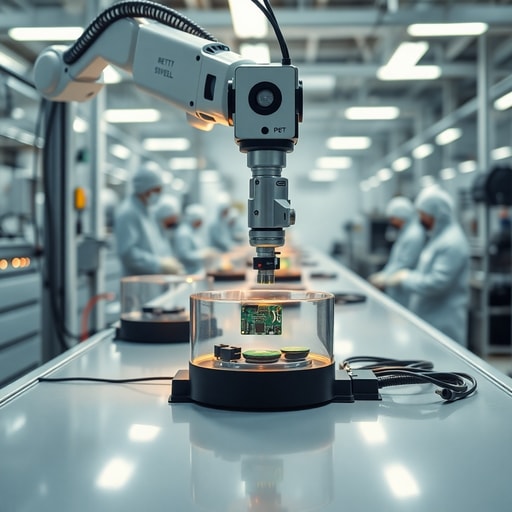
The air on our Pearl River Delta production floor tastes like sharp ozone and warm, freshly extruded ABS plastic. You can hear the rhythmic clack-hiss of the injection molding machines, a mechanical pulse that dictates the pace of our day. Last Tuesday, while watching an automated assembly arm place a tiny Wi-Fi antenna into a smart laser toy, I noticed a slight tremor in the calibration. That tiny variance—less than a millimeter—could have caused signal attenuation, leading to the dreaded “device offline” notification for a pet owner thousands of miles away. We paused the line, recalibrated the sensor, and scrapped the batch. That is the cost of reliability.
Most brands suffer from “yield rate drift,” a silent killer where the first hundred units work perfectly, but the subsequent thousand start failing as components overheat or lose stability. I have spent twelve years watching this unfold. The industry obsession with cutting pennies on PCB (Printed Circuit Board) vendors is, frankly, madness. When you source the cheapest ESP8266 modules, you aren’t saving money; you are buying a support ticket nightmare. We moved exclusively to ESP32 modules years ago. The cost delta is negligible, but the stability gains in real-world, crowded home Wi-Fi environments are massive. My contrarian take? If your factory isn’t willing to show you their signal interference test logs, they are hiding a high return rate.
Effective IoT integration requires more than just a decent chip. It demands a holistic approach to the device’s “handshake” protocol. I’ve seen beautiful toys fail because the plastic casing acted as a Faraday cage, blocking the very signal the toy was designed to transmit. We test every prototype in a simulated “noisy” environment—a room packed with multiple routers, microwaves, and Bluetooth devices—to mimic a modern smart home. If the device struggles to maintain a connection under that pressure, it isn’t ready for your brand’s logo.
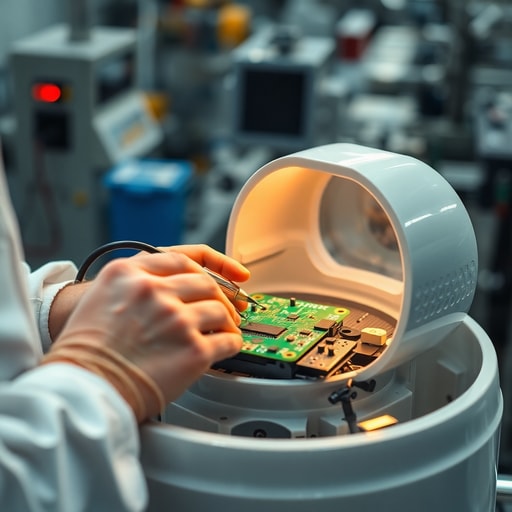
Granular attention to assembly is the difference between a product that builds a brand and one that destroys it. We recently identified a flickering issue in a batch of interactive feeders caused by a loose ground wire near the motor housing. It took one of our engineers three days to map the interference, but we fixed it by redesigning the internal chassis to isolate the high-voltage motor from the low-voltage communication board. OEM buyers often skip these technical deep dives, but these are the details that prevent the dreaded “app not connecting” feedback loop. Your customers don’t care about the engineering; they only care that their cat gets fed or their dog gets played with while they are at the office.
Quality is quite literally your best marketing tool. When your product stays connected, your user retention stays high. We maintain CE and UL certifications not just for compliance, but as a baseline for the engineering standards we demand of ourselves. If you are preparing to scale your pet tech brand, Explore DDPark Smart Pet Product Catalog to see the hardware designs we’ve perfected over a decade. For those looking to avoid common manufacturing pitfalls, Request a Free OEM Quote from DDPark, or dive deeper into our DDPark 10+ Years Manufacturing Expertise to see how we handle high-volume production without sacrificing connection integrity.
Frequently Asked Questions
Q: Why does my pet toy app show the device as offline?
A: This is usually caused by signal interference or a weak internal antenna. Many entry-level toys struggle with the “handshake” process when home Wi-Fi networks become congested. Using high-grade processors like the ESP32 ensures a persistent, stable connection.
Q: How do I ensure my smart pet toy stays connected long-term?
A: Reliability is built on the factory floor. Insist on high-quality Wi-Fi modules, proper antenna shielding, and rigorous pre-shipment stress testing. If your manufacturer is cutting corners on the PCB, your app connectivity will be the first thing to fail.
Work with DDPark
Experience industry-leading [highlight: battery backup protection, CE FCC RoHS certified, matter protocol ready, stable Tuya connectivity] for your next product launch.
Ready to Start Your OEM Order?
Contact our B2B team today for pricing, MOQ, and custom branding options.