Smart Pet Toy Battery Failure: A Factory-Floor Investigation
I remember standing on the production line in 2016, watching a batch of laser toys flicker and die during a routine aging test. It wasn’t the battery itself that failed; it was a cheap, poorly soldered capacitor that couldn’t handle the voltage spike from the motor. When a customer asks, “why does my smart pet toy battery failure and how to solve it,” they are usually dealing with a breakdown in the power management system, not just a dead cell. The answer is almost always a combination of subpar component sourcing and unoptimized firmware that keeps the device “awake” when it should be resting.
The Sensory Reality of the Factory Floor
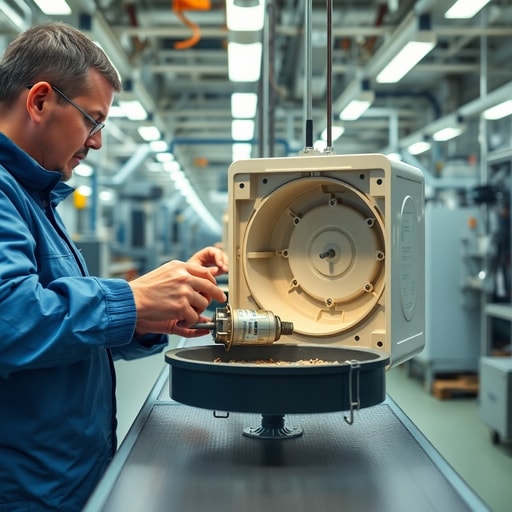
Walking through a manufacturing facility, you can smell the quality. In a premium shop, the air is clean, and you hear the rhythmic, precise *click-hiss* of automated solder paste machines. In the lower-tier factories I’ve toured, the air smells of acrid flux, and the workers are manually soldering boards with shaky hands under dim lights.
That manual inconsistency is the primary culprit behind the “dead on arrival” complaints you see on Amazon. When a solder joint is cold or uneven, it creates high resistance. Resistance generates heat. Heat kills lithium-ion batteries faster than any amount of overcharging. If you want to solve battery failure, you have to look at the solder joints under a microscope before the casing is ever snapped shut.
| Failure Symptom | Primary Cause | Solution |
| :— | :— | :— |
| Rapid Discharge | High quiescent current in firmware | Optimize firmware sleep cycles |
| Overheating | Low-quality copper motor winding | Switch to premium motor components |
| Charging Failure | Poor solder joint conductivity | Implement AOI (Automated Optical Inspection) |
| Sudden Shutdown | Voltage sag under load | Upgrade to high-C-rate lithium cells |
The “Cheap Component” Trap
Distributors often try to shave $0.20 off the unit price by switching to a “no-name” battery supplier. This is a classic false economy. I have seen thousands of units returned because the battery protection circuit board (PCM) was essentially a piece of cardboard with a wire attached.
Firmware is the other silent killer. Many developers write code that keeps the WiFi module pinging the server every two seconds, even when the toy is sitting idle. That constant “heartbeat” drains the battery in days rather than weeks. A professional-grade smart pet toy should utilize deep-sleep modes, waking up only when the infrared sensor detects movement. If your device doesn’t have a sophisticated sleep-wake logic, you are fighting a losing battle against physics.
The DDPark Engineering Philosophy
We don’t just assemble toys; we obsess over the electrical architecture. At our facility, I personally oversee the stress-testing phase. We simulate extreme conditions—constant motor engagement, high-frequency WiFi polling, and thermal cycling—to ensure that the product won’t fail in a customer’s living room.
My contrarian take? Most manufacturers test the *battery*, but they don’t test the *system*. You can have the best battery in the world, but if the motor controller is inefficient, the battery will still fail prematurely. We prioritize the integration of dual-core processors that manage power consumption with surgical precision. This approach has allowed our partners to maintain return rates below 0.5%, a figure that is unheard of in the budget-heavy pet tech space.
Explore DDPark Smart Pet Product Catalog to see how our engineering-first approach handles power efficiency.
A Distributor’s Checklist for Quality Assurance
Before you commit to a bulk order, you need to play the skeptic. Don’t just take the factory’s word for it. Demand transparency. Use this list to vet your next production run:
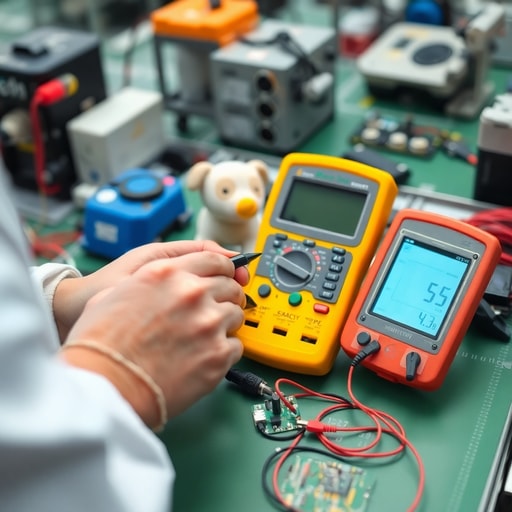
1. **Firmware Power Audit:** Request the “deep sleep” current draw measurements. If it’s above 50µA, walk away.
2. **IQC Documentation:** Insist on seeing the battery cell cycle life reports.
3. **Thermal Stress Tests:** Run the device for 60+ minutes. If the casing exceeds 45°C, the power management is failing.
4. **Solder Inspection:** Confirm the use of AOI machines. Manual visual checks are no longer sufficient for IoT devices.
5. **Component Traceability:** Verify that the WiFi PCB and motor are sourced from Tier-1 suppliers.
Don’t let your brand reputation evaporate because of a $0.50 capacitor. Request a Free OEM Quote from DDPark and let us help you scale with confidence.
Why Reliability is the Best Marketing
Customers in the US and EU are becoming increasingly cynical about tech that breaks after a month. They don’t want a “disposable” smart toy; they want a device that integrates into their home. When you provide a product that stays charged and functions consistently, you earn the most valuable currency in business: trust.
We have spent 12 years refining this process, from simple mechanical feeders to complex IoT-integrated interactive toys. We understand that yield rate drift is the silent killer of your brand. Whether you are selling smart feeders, litter boxes, or laser toys, consistency is what keeps your Amazon ranking stable and your customer support costs low. You can learn more about our history and commitment to quality at DDPark 10+ Years Manufacturing Expertise.
Frequently Asked Questions
Q: Why does my smart pet toy stop working even when the battery says it has charge?
A: This is usually due to “voltage sag.” When a cheap battery cannot provide the required current to the motor, the device’s firmware detects a voltage drop and shuts down to protect the hardware, even if the battery percentage seems sufficient.
Q: How can I tell if my manufacturer is using low-quality components?
A: Look for frequent failures in charging ports, rapid heat buildup, or inconsistent firmware connectivity. High-quality manufacturers use AOI cameras to inspect solder points and provide detailed aging test reports for every batch.
Q: Does firmware really affect battery life?
A: Absolutely. Inefficient coding that keeps the WiFi module “awake” or constantly polling for data will drain a battery exponentially faster than a well-optimized firmware that utilizes deep-sleep cycles.
Work with DDPark
Experience the DDPark difference: our products feature anti-jam infrared detection, aging test before shipment, matter protocol ready, and in-house R&D engineering. Stop troubleshooting and start selling.
Ready to Start Your OEM Order?
Contact our B2B team today for pricing, MOQ, and custom branding options.